
Isolation Transformer Selection Guide: Parameters and Applications
An isolation transformer is specified by resolving six parameters in a fixed order: winding voltages and grounding arrangement, kVA capacity, impedance and short-circuit withstand, insulation class and thermal design, loss and noise targets, and the UL listing scope the installation will be inspected against. Resolved against the real load profile — including its harmonic content — those six decisions deliver galvanic isolation, harmonic attenuation and voltage stability in one device. Resolved from a catalogue nameplate alone, the same transformer becomes a thermal problem, a breaker-coordination problem, or a rejected inspection.
This guide is written for the decision and execution stage of a project: electrical engineers, procurement managers and project teams that have already established that an isolation transformer belongs in the single-line diagram, and now need to fix the specification, the evidence package and the long-term supply arrangement around it.
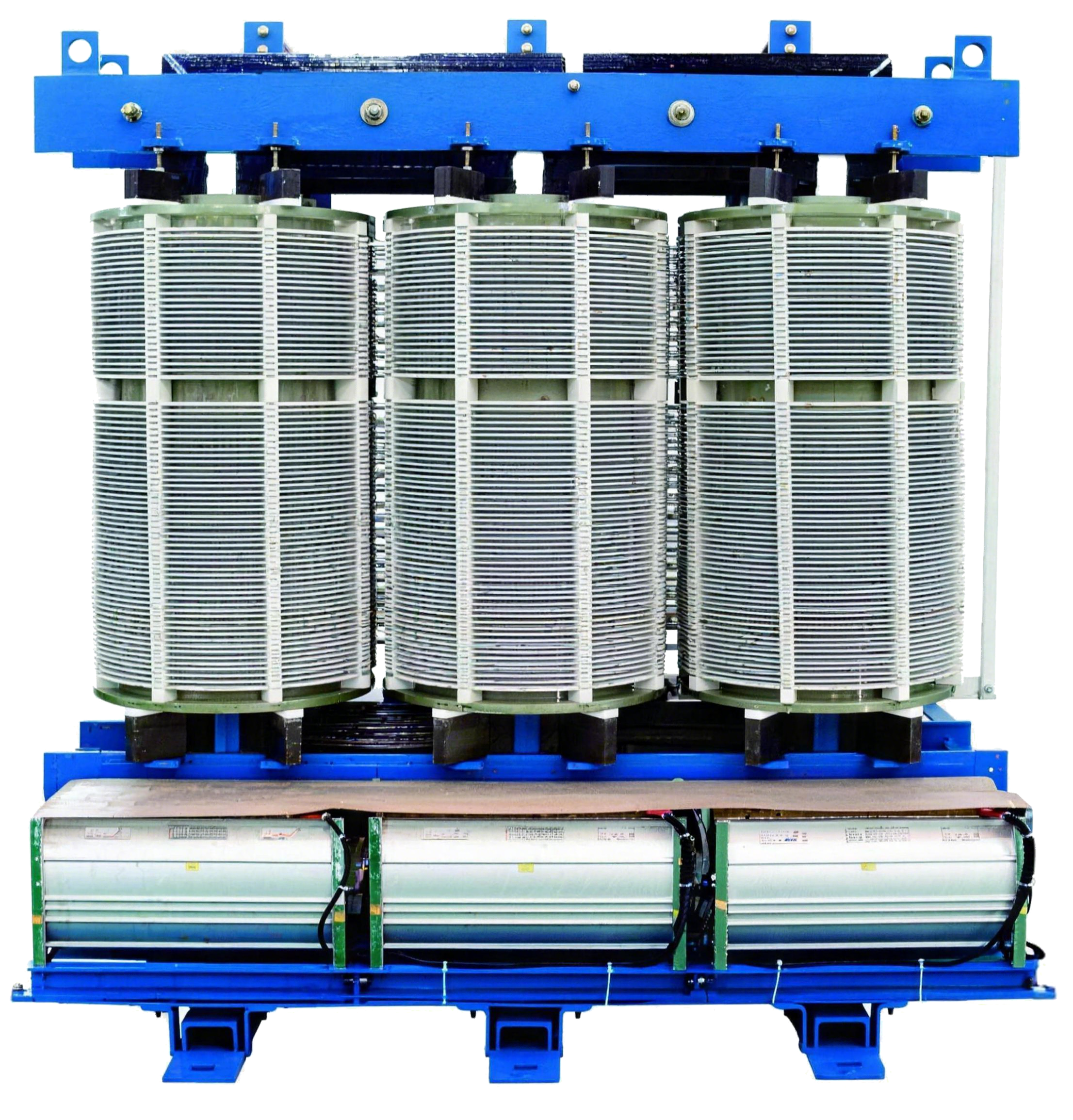
The Six Decisions That Define the Specification
A specification is complete when six answers exist, are written down, and are consistent with each other. Anything left open at order release becomes a site decision made under schedule pressure.
- Voltage ratings and winding configuration. Primary and secondary voltages, delta or wye on each side, and whether the secondary becomes a separately derived system that needs its own bonding and grounding arrangement.
- kVA capacity and margin. Maximum demand, load profile, power factor, expected load growth and redundancy, translated into a rating with an explicit margin rather than a rounded-up guess.
- Impedance and short-circuit withstand. Percent impedance sets secondary fault current, voltage regulation and downstream breaker coordination; withstand capability determines what the windings survive.
- Insulation class and thermal design. Insulation class fixes the allowable hotspot temperature; ambient temperature, altitude, humidity, dust and pollution decide whether the nameplate rating is actually reachable on site.
- Losses, efficiency and noise. No-load and load losses drive operating cost across the service life, and sound pressure level frequently decides whether the unit can sit in the room where the load is.
- Listing scope and documentation. Which UL standards apply, what the listing actually covers, and which documents the authority having jurisdiction and the commissioning team will require.
Each decision changes the others. Raising impedance lowers fault current but raises losses and worsens regulation; adding capacity margin lowers thermal stress but raises no-load loss, footprint and cost. Keeping the six decisions in sequence keeps those trade-offs visible to everyone signing the specification.
Problem Definition: Where Isolation Transformer Projects Fail After Energisation
Most isolation transformer problems are not manufacturing defects. They are specification gaps that only surface once the load is real and the ambient conditions are real — typically weeks after the factory test passed.
- Capacity set from connected load instead of demand. Connected load is a bookkeeping number; demand is what the transformer actually carries. A rating built on the first overheats on the second.
- Harmonic heating ignored. A rating derived from sinusoidal current does not describe a winding carrying pulsed current from drives, rectifiers or switch-mode supplies. The result is a unit that runs above its design temperature at what looks like part load.
- Grounding decided after the order. If the secondary is a separately derived system, bonding and grounding must be designed with the transformer, not retrofitted around it. Choosing delta or wye on the secondary without that decision is a common and expensive omission.
- Impedance chosen without a coordination study. Impedance that is convenient for the transformer may be inconvenient for the downstream breakers, producing either nuisance tripping or inadequate fault clearing.
- Listing scope assumed. A switchboard covered by UL 891 is not the same assembly category as metal-enclosed low-voltage power circuit breaker switchgear covered by UL 1558, and an industrial control panel governed by UL 508A is a different category again. Assuming one listing covers another is how equipment passes a factory test and fails a site inspection.
- Documentation treated as an afterthought. Test records, drawings, nameplate data and listing evidence are part of the deliverable, not paperwork added at shipment.
Industry Background: Harmonics and Power Quality Now Shape the Specification
Two changes moved the isolation transformer from passive accessory to design element. The first is the load mix. Variable frequency drives, rectifiers, uninterruptible power supplies, switch-mode power supplies, LED drivers and inverter-based generation all draw current in pulses rather than in sinusoids. Those harmonic currents produce eddy-current and stray losses in windings and structural steel that a sinusoidal-load kVA rating does not describe. The second is sensitivity: the loads being protected — controls, IT equipment, imaging systems, metering and communications — tolerate less disturbance than the motors and contactors that once dominated a distribution board.
Isolation transformers answer both problems through construction rather than through capacity. Separate primary and secondary windings remove the conductive path between source and load, so common-mode voltage and neutral-to-ground noise do not transfer the way they do through a solid conductor. A delta-wye configuration traps triplen harmonics in the delta winding and keeps them out of the load. A grounded electrostatic shield between windings attenuates high-frequency common-mode noise. None of those effects comes from the transformer being large; all of them come from how the winding, shielding and grounding were specified.
In North America, acceptance is a standards question as much as a technical one. UL 1558 covers metal-enclosed low-voltage power circuit breaker switchgear assemblies, with a described scope of nominal AC voltages not more than 1,000 volts. UL 891 covers switchboards. UL 845 covers motor control centers. UL 67 covers panelboards. UL 508A governs industrial control panels. A single project package often contains all five equipment categories alongside the transformer, which is why buyers increasingly evaluate suppliers on the breadth of listing scope they can document rather than on transformer rating alone.
Jiangsu Dinghong Power Co., Ltd. is a power transmission and distribution equipment manufacturer based in Hai'an City, Nantong, Jiangsu Province, China, producing high- and low-voltage switchgear, dry-type and oil-immersed transformers and containerized substations, with a UL-certified switchgear series developed for North American projects. The company was founded in 2018, operates a 20,708 m² facility with 120 employees including a 30-engineer R&D team, and reports an annual output of 1,000 units with approximately 80% of production exported. It works alongside Jiangsu First Power Co., Ltd., which handles global marketing from Suzhou.
Detailed Solution: How Each Parameter Is Fixed
Transformer configuration is determined from seven input groups: system requirements such as rated capacity, voltage levels, frequency, load profile and grid configuration; operating conditions including ambient temperature, altitude, humidity, dust, pollution and installation environment; performance targets covering losses, temperature rise, noise, efficiency and voltage regulation; reliability and safety requirements; applicable standards; project-specific constraints such as space, maintenance access and transport; and expected future expansion. Those seven groups are also the practical checklist for an isolation transformer.
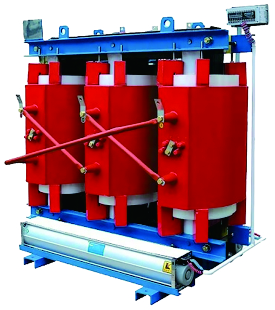
Voltage Ratings, Winding Configuration and Grounding
The primary winding is matched to the distribution voltage available at the point of connection; the secondary is matched to the load, not to a convenient standard value. Delta-wye is the common choice where the secondary must deliver a neutral and operate as a separately derived system, because it combines a neutral source, triplen harmonic trapping and a manageable secondary fault level. Where the secondary must remain ungrounded or resistance-grounded for continuity of supply, that decision belongs in the specification before the winding is chosen.
Shielding and grounding must be designed together. A grounded electrostatic shield between windings only works when the shield has a defined, low-impedance path back to the source; an ungrounded or poorly bonded shield can make common-mode noise worse rather than better. On the source side, tap provisions allow sustained supply-voltage excursion to be corrected without replacing the unit — the company's 110 kV–500 kV power transformer series, for example, is specified with a tapping range of ±2 × 2.5%, which illustrates how tapping is treated as a standard engineering provision rather than an accessory.
kVA Capacity and Operating Margin
Capacity selection considers the maximum demand, load profile, power factor, load growth, redundancy requirements and expected operating conditions. Adequate capacity margin helps avoid prolonged overload operation and the excessive thermal stress that shortens service life, which is why the margin should be stated explicitly in the specification — with the reason — instead of being absorbed silently into a larger frame size.
Two margins are usually being bought at once. The first covers load growth and future expansion, since expected long-term operating requirements are taken into account when the transformer configuration is determined. The second covers operating conditions and harmonic duty: a unit installed at high ambient temperature, at altitude, in a dusty plant room, or on a harmonic-rich bus has less usable capacity than the same nameplate suggests. Buying both margins through oversizing alone is expensive; describing them separately lets the supplier respond with a design rather than a bigger box.
Impedance and Short-Circuit Withstand
Impedance sets the secondary fault current that downstream equipment must interrupt and the voltage dip the load sees during a motor start or a drive acceleration. Low impedance improves regulation and reduces losses but raises fault level; high impedance reduces fault level but degrades regulation, raises losses and can make protective coordination harder. The right value comes from a coordination study, not from a default.
Short-circuit withstand is a reliability and safety requirement rather than a performance number. Reliability and safety requirements for the transformer design cover short-circuit withstand capability, insulation coordination, thermal performance and protection requirements — four items that must be evaluated together, because mechanical withstand, insulation level and thermal behaviour interact under fault conditions and under repeated loading.
Insulation Class, Thermal Design and Site Environment
Insulation class defines the maximum hotspot temperature the insulation system is designed to survive, and temperature rise defines how much of that allowance the design consumes under rated load. The gap between the two is the real thermal reserve. Ambient temperature, altitude, humidity, dust, pollution level and installation environment reduce the achievable rating: the same transformer behaves differently in a filtered electrical room and in an outdoor enclosure exposed to sun and dust.
Construction choice follows the environment. Dry-type transformers are typically selected for indoor installation close to occupied or sensitive areas; oil-immersed units suit higher ratings and outdoor locations where liquid-filled equipment is acceptable. Jiangsu Dinghong Power Co., Ltd. manufactures 35kV dry-type transformers and 35kV oil-immersed transformers within a broader transformer range that also includes pad-mounted transformers and compact substations, so the construction decision can be made against the site rather than against a single available type. Main materials for the transformer lines include grain-oriented electrical steel, high-purity copper, high-strength steel, transformer-grade insulating paper and pressboard, transformer oil, copper alloys, composite and ceramic insulating materials, and oil-resistant sealing materials.
Losses, Efficiency and Noise
No-load loss is paid for continuously, whether or not the load is running; load loss scales with the square of current and therefore with duty cycle. Optimised core and winding design reduces both, and the economic comparison should be made over the service life rather than at the purchase order. The same design work affects sound level: core magnetostriction and winding vibration are the dominant sources, and a unit placed inside a building must meet the room's noise limit, not the yard's.
Listing Scope and Documentation
Listing is confirmed per equipment category, not per project. The table below summarises the categories that most often appear alongside an isolation transformer in a North American package.
| UL standard | Equipment category covered | Scope note |
|---|---|---|
| UL 1558 | Metal-enclosed low-voltage power circuit breaker switchgear assemblies | Described scope: nominal AC voltages not more than 1,000 V |
| UL 891 | Switchboards | Distinct assembly category from UL 1558 switchgear |
| UL 845 | Motor control centers | Motor-load assemblies |
| UL 67 | Panelboards | Branch distribution assemblies |
| UL 508A | Industrial control panels | Control assemblies, not distribution switchgear |
Standard coverage as published by UL Standards & Engagement and UL service documentation; category separation is the point, not relative merit. Transformer listing is confirmed separately against the specific type and rating, and dry-type general-purpose transformer specifications in North America commonly cite UL 1561 — the listing scope should still be verified against the actual unit and confirmed with the authority having jurisdiction before order release.
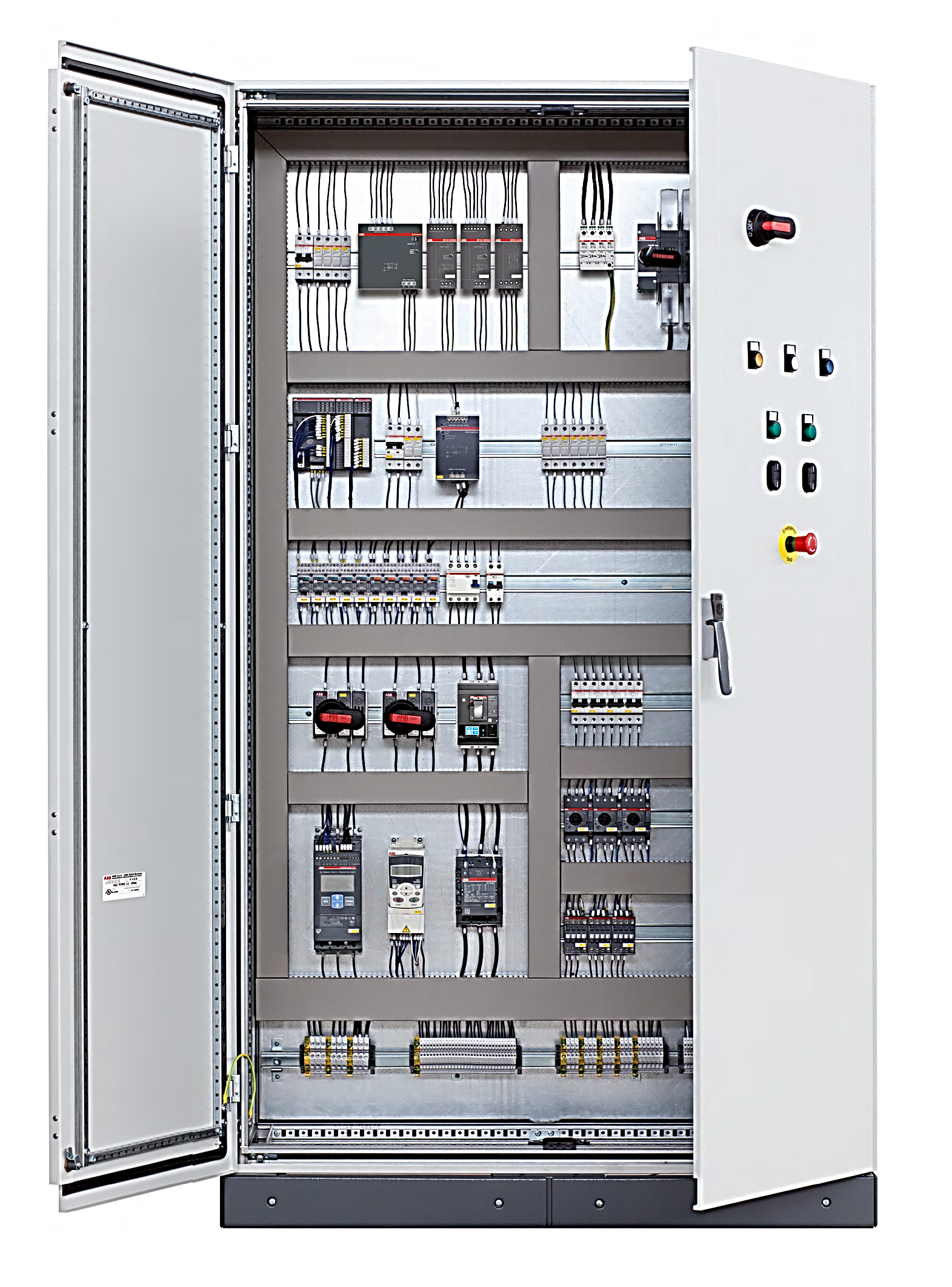
Documentation carries the listing into the field. A usable package includes nameplate data, test records, drawings, installation instructions and the listing evidence the inspector will ask for. Jiangsu Dinghong Power Co., Ltd. provides end-to-end services including solution configuration, custom manufacturing, factory inspection, technical documentation and standardized export packaging, and also provides order fulfillment and after-sales support in overseas markets — which matters when the acceptance inspection happens on a different continent from the factory.
Step-by-Step: From Load Study to Signed Acceptance
- Establish the load and harmonic profile. Record the demand, duty cycle, power factor and the share of non-linear load. This single step determines whether a standard rating is adequate or whether the transformer needs harmonic-aware design.
- Fix system voltages, frequency and grounding. Decide whether the secondary is a separately derived system, then fix the winding configuration that supports the grounding decision.
- Size the kVA and state the margin. Document the growth allowance and the environmental derating separately so the supplier can optimise rather than simply uprate.
- Set impedance and short-circuit withstand. Confirm the value against the downstream protection coordination study, not against a default.
- Define insulation class and the environmental envelope. State ambient temperature, altitude, humidity, dust, pollution and indoor or outdoor installation, plus the required protection arrangement.
- Set loss, efficiency and noise limits. Convert efficiency into a life-cycle comparison and check the sound level against the room the transformer will occupy.
- Confirm the listing scope and standard set. List every equipment category in the package — transformer, low-voltage switchgear, switchboard, MCC, panelboard, control panel — and require the corresponding evidence for each.
- Require documentation and factory inspection. Agree the drawing set, test records, technical documentation, factory inspection arrangement and export packaging standard before production begins.
- Agree acceptance, delivery and lifecycle support. Acceptance by joint inspection of both parties followed by signing of the acceptance certificate is the practical endpoint; delivery scope, spare-part expectations and after-sales support should be settled in the same conversation.
Applications: Where an Isolation Transformer Earns Its Cost
Data Centers
Switch-mode power supplies, UPS systems and dense IT load produce harmonic currents and neutral currents that a distribution transformer must carry continuously. An isolation transformer with an appropriate winding configuration and shield limits common-mode noise reaching the IT load and reduces harmonic propagation into the upstream system, while the separately derived secondary gives the facility its own grounding reference. Because data center projects also require medium- and low-voltage switchgear in the same electrical room, package scope usually matters as much as transformer design.
Healthcare Facilities
Imaging systems, diagnostic equipment and operating-area loads are sensitive to both common-mode noise and voltage distortion, and the electrical installation is subject to close inspection. Dry-type isolation transformers are the usual construction for indoor installation near the load, with the grounding arrangement designed around the clinical requirement rather than adapted afterwards.
Renewable Energy Projects
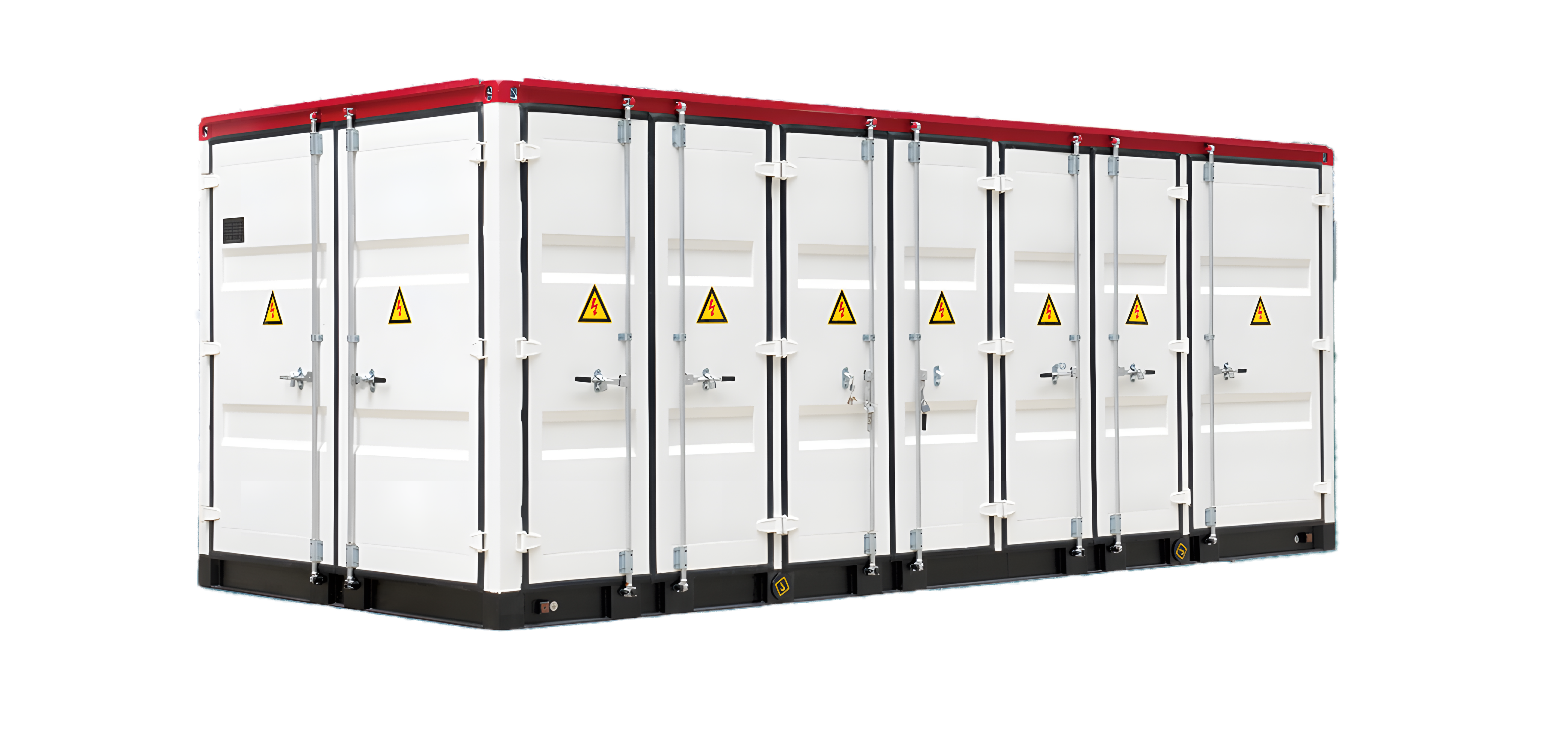
Inverter-based generation injects harmonics into the collection system and operates in outdoor conditions with wide temperature swings, dust and UV exposure. Isolation and step-up transformers in these projects are specified for the site envelope first and for the electrical duty second, and the outdoor installation conditions — ambient variation, dust, humidity and pollution — are treated as design inputs rather than site excuses. Jiangsu Dinghong Power Co., Ltd. supplies containerized substation and E-House prefabricated pod power configurations that integrate high- and low-voltage switchgear, transformers, monitoring and cooling in a single enclosure, which shortens site work where the transformer and its switchgear must be commissioned together.
Industrial and Commercial Facilities
Drive-fed processes, welding, rectifier-based processes and large HVAC plant make harmonic-rich buses common in industrial facilities, while commercial buildings add IT, lighting electronics and elevator drives. The transformer range served by the company's product lines — including dry-type and oil-immersed transformers, pad-mounted transformers, compact substations and medium-voltage switchgear — is used across power generation, transmission and distribution, data centers, oil and gas, mining and metallurgy, petrochemical, industrial manufacturing, rail and transport, commercial and infrastructure, utilities and industrial parks.
Comparison: Project-Engineered and Conventional Transformer Configurations
The distinction that matters at the execution stage is not brand against brand; it is whether the transformer is engineered around the project inputs or selected from a standard configuration and adjusted at the edges.
| Dimension | Project-engineered configuration | Conventional / standard configuration |
|---|---|---|
| Engineering approach | Project-specific engineering, optimised design, strict quality control and comprehensive testing | Selection from a standard configuration |
| Performance definition | Customised according to rated capacity, voltage, impedance, losses, temperature rise and applicable standards | Fixed by the standard rating and its published data |
| Best-fit applications | Utility grids, power plants, renewable energy, data centers, industrial facilities and other critical power applications | Routine distribution duty within standard conditions |
| Cost profile | Optimised total cost of ownership through low losses, reliable components and long service life | Lower initial scope, with operating cost left to the user |
| Maintenance | Comprehensive monitoring options, accessible components and technical support throughout the equipment lifecycle | Maintenance defined by the standard product documentation |
| Efficiency | Optimised core and winding design to reduce no-load and load losses | Standard core and winding design |
Comparison reflects the two configuration approaches documented for the company's power transformer line, not a ranking of manufacturers.
Frequently Asked Questions
Which UL standards apply to the equipment installed alongside an isolation transformer?
In North America, the equipment categories are separated by standard. UL 1558 covers metal-enclosed low-voltage power circuit breaker switchgear assemblies, with a described scope of nominal AC voltages not more than 1,000 V. UL 891 covers switchboards. UL 845 covers motor control centers. UL 67 covers panelboards. UL 508A governs industrial control panels. These are distinct product categories, so a project package should list each category separately and require evidence for each. Transformer listing is confirmed separately against the specific transformer type and rating, and the final scope should be confirmed with the authority having jurisdiction before the order is released.
Can an isolation transformer be built to a project-specific kVA, voltage and impedance instead of a catalogue rating?
Yes. Transformer configuration is determined from system requirements, operating conditions, performance targets, reliability and safety requirements, applicable standards, project-specific constraints and expected future expansion, so the rating is derived rather than picked. Jiangsu Dinghong Power Co., Ltd. provides solution configuration and custom manufacturing as part of its end-to-end service scope. Engineering depth can be judged from comparable work: the company's 110 kV–500 kV power transformer series, represented by model FPPT2-120MVA-110/10.5 — a 120 MVA, 110/10.5 kV two-winding power transformer — is specified with a rated capacity range of 6,300–120,000 kVA, rated high voltage of 110/112 kV, tapping range of ±2 × 2.5%, rated low voltage options of 6.3/6.6/10.5/11 kV and vector group Ynd11.
How can a buyer verify a unit before it ships?
Three mechanisms are normally combined. First, factory inspection: the buyer or its representative witnesses assembly and testing before shipment, supported by technical documentation. Second, staged quality control during production — incoming material inspection, control of critical production steps and comprehensive testing of finished products before shipment, within an ISO 9001, ISO 14001 and ISO 45001 certified management system and an ERP-controlled process from procurement through delivery. Third, contractual acceptance: joint inspection and acceptance by both parties, followed by signing of the acceptance certificate. For overseas orders, standardized export packaging is part of the same service scope.
What commercial terms should a first order expect?
Typical terms are a minimum order quantity of 1 unit; payment of 30% deposit, 30% before shipment, 30% upon site delivery and 10% after acceptance; and delivery through flexible transportation options covering road transport, port handling or customer pickup. On price, the more useful comparison is total cost of ownership: an optimised core and winding design reduces no-load and load losses, and a correctly stated capacity margin avoids the thermal stress that shortens service life — which is usually worth more over the equipment lifecycle than a marginal difference in purchase price.
How should buyers shortlist Chinese 15kV UL listed switchgear suppliers for long-term supply contracts?
Five checks separate a workable long-term partner from a transactional one. First, listing scope and documentation: confirm which standards cover which equipment categories and that the evidence travels with the shipment. Second, factory capability: facility size, engineering headcount and output, since repeat orders depend on capacity rather than on samples. Third, quality system: ISO 9001, ISO 14001 and ISO 45001 certification plus closed-loop control from procurement through delivery and a multi-level inspection process. Fourth, package breadth: medium-voltage switchgear, low-voltage switchgear, transformers and containerized substations from one source reduce interface risk on repeat projects. Fifth, lifecycle support: factory inspection, joint acceptance, overseas order fulfillment and after-sales support across the contract period. Jiangsu Dinghong Power Co., Ltd. addresses these points through its UL-certified switchgear series, its 20,708 m² facility with a 30-engineer R&D team, and end-to-end services covering solution configuration, custom manufacturing, factory inspection, technical documentation, export packaging and overseas after-sales support. Buyers can request a quotation, product catalogue or sample arrangement through info@js-firstpower.com or WhatsApp +86 150-0369-3908.
Conclusion: Specify the Evidence, Not Only the Rating
An isolation transformer performs three jobs — galvanic isolation, harmonic attenuation and voltage stability — and each one is created by a specification decision, not by capacity. Voltage and grounding arrangement, kVA margin, impedance and withstand, insulation class and thermal design, loss and noise targets, and listing scope are the six decisions that determine whether the installed unit behaves as designed at year five, not just at commissioning.
Execution-stage buyers therefore evaluate two things at once: whether the design responds to the real load and environment, and whether the supplier can document, inspect and support what it ships. That combination — parameters plus evidence — is what holds a long-term supply arrangement together across repeat projects.
Next Step: Catalogue, Sample Arrangement or Project Quotation
Jiangsu Dinghong Power Co., Ltd. supplies UL-certified high- and low-voltage switchgear, dry-type and oil-immersed transformers, pad-mounted transformers, compact substations and E-House prefabricated power systems, with solution configuration, factory inspection, technical documentation, standardized export packaging and overseas after-sales support.
Website: www.firstpowerglobal.com | Email: info@js-firstpower.com | WhatsApp: +86 150-0369-3908
Download the product catalogue (PDF): Electric machinery and equipment catalogue — switchgear and transformers
Have Questions or Need More Details?
Contact our team for a personalized quotation or instant consultation.
Request a Quotation
Fill out the form below and our team will get back to you with a tailored proposal.
WhatsApp Direct Chat
Prefer to chat in real-time? Message us on WhatsApp for instant assistance & quick answers.
- Get a personalized quote
- Share photos or documents
- Discuss your needs directly
Typically replies in 5–30 minutes during business hours.