UL 891 Switchboard vs UL 1558 Switchgear: A Data Center and Industrial Selection Guide
Short answer: specify a UL 891 switchboard when the project needs a compact low-voltage assembly that distributes power to a high number of feeder and branch circuits, at a rated operating voltage up to 480 V and short-circuit withstand up to 100 kA. Specify UL 1558 switchgear when the project needs metal-enclosed construction built around low-voltage power circuit breakers, busbar capacity up to 6,000 A, a bus tie / bus coupler section, and a defined short-circuit and arc-withstand envelope for critical facilities such as data centers and heavy industrial plants.
Both classes are low-voltage power distribution equipment, and on a single-line diagram they can look almost interchangeable. Each accepts air circuit breakers. Each can act as a main incoming section. Each can feed downstream distribution sections. What separates them is the assembly standard and everything that standard requires of the construction, the switching device, the testing, and the way the equipment is serviced.
This guide compares two concrete product lines from the same manufacturer so the comparison stays practical. Jiangsu Dinghong Power Co., Ltd. is a Chinese manufacturer of power transmission and distribution equipment — high- and low-voltage switchgear, dry-type and oil-immersed transformers, and containerized substations — based in Hai'an City, Nantong, Jiangsu Province, with global marketing operations in Suzhou and a strategic focus on the North American market. Two of its low-voltage lines are compared here: the FP-LSB UL 891 switchboard and the FP-LSG UL 1558 low-voltage switchgear.
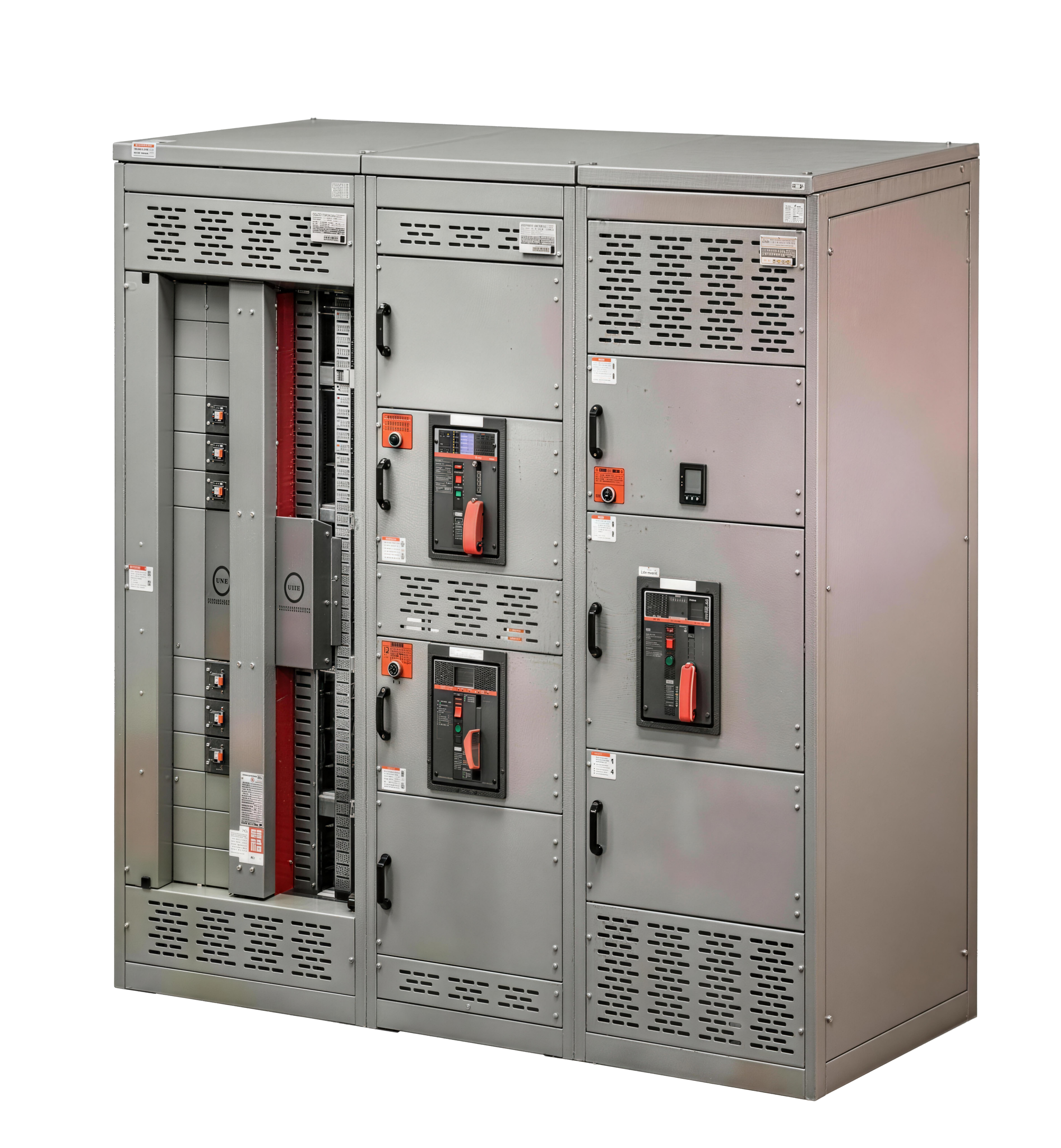
FP-LSB UL 891 switchboard: main incoming, feeder and distribution sections in a single front-accessible lineup.
Why UL 891 and UL 1558 Are So Easy to Confuse
The two standards describe two different products, not two sizes of one product. UL 891 is the standard that covers switchboards. UL 1558 covers metal-enclosed low-voltage power circuit breaker switchgear assemblies, and is described as applying to switchgear assemblies that service circuits operating at nominal AC voltages of not more than 1,000 volts. The voltage overlap is why buyers assume the terms are interchangeable; the assembly type is why they are not.
For a buyer working between evaluation and execution, mixing the two up costs time and money in four specific places:
- Room layout. Access design decides the aisle. FP-LSB switchboards can be supplied mainly front access (FP-LSB1-I, FP-LSB1-G), rear-only access (FP-LSB2-I), or with both front and rear access (FP-LSB2-G). Order the wrong one and the electrical room is wrong before the equipment ever ships.
- Shop drawing review. A specification that says only "low voltage switchgear" can be answered with a switchboard quotation, or the reverse. The two submissions will not compare on section count, footprint, or breaker type.
- Fault duty. Short-circuit withstand is published per bus location. FP-LSB switchboards deliver up to 100 kA at 480 V; the FP-LSG switchgear line publishes 150 kA / 1 s on the horizontal busbar and 65 kA, 85 kA or 100 kA symmetrical on the vertical busbar depending on frame. A rating read from the wrong line will not survive coordination review.
- Maintenance concept. A switchboard built around molded-case and air circuit breakers and a switchgear assembly built around low-voltage power circuit breakers imply different spares strategies, different drawout practices and different outage planning.
Where Both Classes Sit in the Low-Voltage Lineup
North American low-voltage power distribution is assembled from several distinct equipment categories, each governed by its own standard and its own listing scope:
- UL 67 — panelboards, for branch-circuit and lighting distribution.
- UL 891 — switchboards, for service-entrance and distribution duty.
- UL 1558 — metal-enclosed low-voltage power circuit breaker switchgear assemblies.
- UL 845 — motor control centers, for grouped motor control.
- UL 508A — industrial control panels.
These are categories, not substitutes. A panelboard cannot do the work of a service-entrance switchboard, and a switchboard is not a substitute for a metal-enclosed power circuit breaker assembly. Switchboards and switchgear are compared most often because both sit at the service-entrance and main-distribution level and both accept air circuit breakers — and because the equipment physically resembles each other from across the room.
As data center and industrial projects add electrical capacity, this decision moves earlier in the design sequence. Once the single-line diagram is frozen, the low-voltage assembly class usually follows from three inputs: continuous current, available fault current, and the maintenance access the site can actually provide.
Detailed Comparison: FP-LSB UL 891 Switchboard vs FP-LSG UL 1558 Switchgear
UL 891 switchboard (FP-LSB): compact, flexible distribution
FP-LSB is a UL 891 switchboard line covering seven configuration types: main incoming, feeder, distribution, service entrance, metering, generator and automatic transfer switchboards. The same platform therefore serves a utility service entrance, an internal distribution board, or a generator-backed transfer section without changing product family.
Four models define the access and rating envelope:
- FP-LSB1-I and FP-LSB1-G are mainly front-access designs.
- FP-LSB2-I is designed for rear-only access.
- FP-LSB2-G supports both front and rear access for flexible operation and maintenance.
On the switching device side, the main air circuit breaker rating covers 800–4,000 A for the FP-LSB1 series and 800–6,000 A for the FP-LSB2 series, while the main molded-case circuit breaker is rated 800–1,200 A and is available only on FP-LSB1-I. Feeder devices follow a similar split: feeder air circuit breakers use the same range as the main circuit, feeder molded-case breakers cover 800–1,200 A on FP-LSB1-I, and 100–1,200 A on both FP-LSB1-G and FP-LSB2-G.
Electrical performance is consistent across the line. All models deliver a short-circuit withstand current of up to 100 kA at 480 V. Lug-type main busbar ampacity reaches up to 4,000 A for the FP-LSB1 series and up to 6,000 A for the FP-LSB2 series, with a rated operating voltage up to 480 V. All configurations support both top and bottom cable entry, which matters in retrofit rooms where the incoming duct bank is already cast.
Enclosure widths range from 26 inches (FP-LSB1-I, for both 800–1200AF molded-case frames and 800–1600AF air circuit breaker frames) to 42/50 inches (FP-LSB1-G and FP-LSB2-G), with 32 inches for ACB_D frames on FP-LSB2-I. Construction uses a high-strength galvanized steel or cold-rolled steel enclosure with a protective coating, and high-conductivity copper or aluminum busbars sized to the rated current and short-circuit requirement. Circuit breakers, switches and protective devices are UL-listed, with molded insulation components, barriers and reinforced steel mounting structures inside.
The FP-LSB line is certified to UL 891 under certificate number UL-US-26123098-0, issued by UL LLC on 10 July 2026 for the U.S. market. Its documented fields of application include data centers, commercial buildings, industrial facilities, healthcare facilities, infrastructure projects, solar and wind renewable projects, oil and gas, utilities, and critical facilities.
UL 1558 switchgear (FP-LSG): metal-enclosed, power circuit breaker construction
FP-LSG is a UL 1558 low-voltage switchgear line built around low-voltage power circuit breakers. Its configuration types — main incoming, feeder, bus tie / bus coupler, distribution, metering, generator and automatic transfer switchgear — include a bus tie / bus coupler section, which is one of the structural differences from a switchboard lineup.
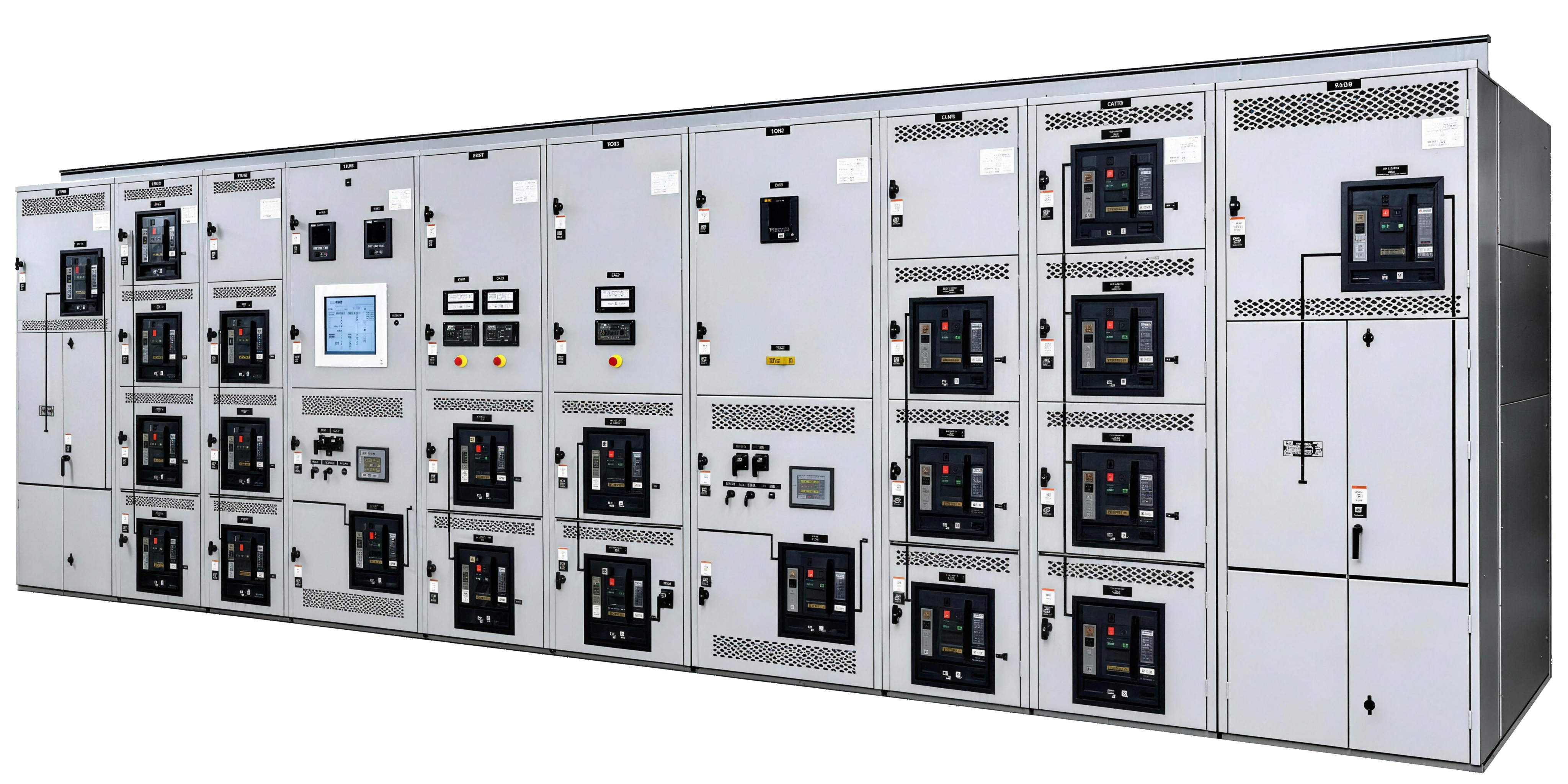
FP-LSG UL 1558 switchgear: LSG-4, LSG-2 and LSG-1 frames with drawout or fixed low-voltage power circuit breakers.
Three frame sizes set the continuous current range:
- LSG-4: 600 A, 1,000 A, 1,200 A, 1,600 A
- LSG-2: 800 A, 1,000 A, 1,200 A, 1,600 A, 2,000 A, 2,500 A, 3,200 A
- LSG-1: 3,200 A, 4,000 A, 5,000 A, 6,000 A
Horizontal busbar ampacity is uniform across all three frames at up to 6,000 A. Vertical busbar capacity scales with the frame: up to 1,600 A for LSG-4, up to 4,000 A for LSG-2, and up to 6,000 A for LSG-1. Basic electrical ratings are 254 V, 508 V or 635 V at 60 Hz, with an AC power frequency withstand voltage of 2.2 kV for one minute and arc resistance performance of Type 2B, rated 100 kA / 0.5 second.
Short-circuit capability is published separately for the two bus systems. The horizontal busbar is rated 150 kA / 1 s across all three frames. Vertical busbar ratings are 65 kA / 149.5 kA (LSG-4), 85 kA / 195.5 kA (LSG-2), and 100 kA / 230 kA (LSG-1), expressed as symmetrical and peak values.
Frame size also sets circuit density. Enclosure dimensions are 26 × 70 × 90 inches for LSG-4 with four circuit breakers per panel, 36 × 80 × 90 inches for LSG-2 with two breakers per panel, and 48 × 80 × 90 inches for LSG-1 with one breaker per panel. A feeder group made of many small circuits and a main incoming section therefore look very different in plan view even though they belong to the same line.
Construction uses a high-strength steel enclosure and reinforced structural frame, high-conductivity copper or aluminum busbars, UL-listed low-voltage power circuit breakers configured as drawout or fixed devices, high-performance insulation components, and busbar supports designed to withstand electrical, thermal and mechanical stress during fault conditions. The full series complies with IEEE C37.20.1, UL 1558, IEEE C37.20.7 and ANSI C37.51. Documented fields of application include data centers, power generation, industrial facilities, oil and gas, mining and metallurgy, commercial facilities, healthcare facilities and infrastructure.
What the differences mean at the procurement stage
- Circuit density versus current. Where the circuit count is high and per-circuit current is moderate, the LSG-4 frame keeps a lineup short at four breakers per panel with 600–1,600 A ratings. Where the incoming rating is the constraint, LSG-1 provides a single breaker per panel up to 6,000 A.
- Footprint. FP-LSB switchboards offer narrow sections from 26 inches where the model and frame allow, which is often decisive in retrofit rooms; FP-LSG layouts are derived from frame dimensions (26, 36 or 48 inches wide) and the number of breakers per panel.
- Service model. Front-only, rear-only and front/rear access options exist on FP-LSB, so the maintenance aisle can be planned to match the building. Rear-only designs suit rooms with a single working aisle; dual-access designs suit rooms with access from both sides.
- Materials. Both lines use copper or aluminum busbars and steel enclosures. FP-LSB uses galvanized or cold-rolled steel with a protective coating; FP-LSG uses a high-strength steel enclosure with a reinforced structural frame.
Step-by-Step: How to Choose Between the Two Classes
- Freeze the electrical data before opening a catalogue. Rated voltage (up to 480 V for the switchboard line, or 254 V / 508 V / 635 V for the switchgear line), continuous current per section, and available short-circuit current at the point of installation. Every downstream decision is made against these three numbers.
- Fix the topology. Single-ended, main-tie-main, bus tie / bus coupler, service entrance, generator, or automatic transfer. FP-LSB covers main incoming, feeder, distribution, service entrance, metering, generator and automatic transfer switchboards. FP-LSG covers the equivalent switchgear configurations plus bus tie / bus coupler switchgear.
- Choose the class. If feeders are predominantly molded-case breakers and the room allows a one-sided layout, a switchboard is usually the efficient answer. If the assembly must be built around low-voltage power circuit breakers, include a bus tie section, or provide a type-tested arc rating, switchgear is the correct class.
- Match continuous current to frame and bus. Main air circuit breakers run 800–4,000 A (FP-LSB1) and 800–6,000 A (FP-LSB2), with busbar to 4,000 A and 6,000 A respectively. On the switchgear side, LSG-4 covers 600–1,600 A, LSG-2 covers 800–3,200 A, and LSG-1 covers 3,200–6,000 A, with vertical busbar to 1,600 A, 4,000 A and 6,000 A.
- Match short-circuit withstand at the right bus. Confirm whether the published rating applies to the main bus, a vertical bus, or a specific section. FP-LSB publishes up to 100 kA at 480 V; FP-LSG publishes 150 kA / 1 s on the horizontal busbar and 65–100 kA symmetrical on the vertical busbar by frame.
- Fix the room and access envelope. Select the access model first (front, rear-only, or both), then confirm section widths and cable entry against the actual room. Cable entry direction matters: all FP-LSB configurations support top and bottom cable entry.
- Confirm materials and construction. Steel type (galvanized, cold-rolled, or reinforced structural steel), busbar material (copper or aluminum), and the listing status of installed breakers and protective devices.
- Verify documentation, testing and delivery. Ask for the certificate scope and number where one applies — for example UL-US-26123098-0 covers the UL 891 switchboard scope — and the standards compliance statement for the UL 1558 line (IEEE C37.20.1, UL 1558, IEEE C37.20.7, ANSI C37.51). Minimum order quantity starts at 1 unit, and lead time is typically 6–12 weeks depending on specification and order quantity.
Use Cases: Data Centers, Industry and Critical Facilities
Data center low-voltage distribution
In a data center, medium-voltage equipment and transformers sit upstream of the low-voltage distribution layer. On that low-voltage layer, the main incoming and tie sections carry the highest continuous current and the highest available fault current, which is where the LSG-2 and LSG-1 frames are normally applied, with the Type 2B arc rating and 150 kA horizontal busbar rating supporting the coordination study. Downstream distribution zones, where circuit counts are higher and per-circuit current is lower, are a natural fit for FP-LSB switchboards in distribution, feeder or metering configurations.
Where the data center is built with an outdoor or prefabricated electrical room, the same manufacturer supplies the FP-EH E-House, which integrates metal-clad switchgear, GIS or C-GIS, MCC, distribution transformers, protection relays and UPS / DC auxiliary power, and is tested with a complete factory acceptance test before shipment. The FP-EH platform is listed for Tier III / Tier IV data center outdoor power distribution systems.
Heavy industrial and process plants
Industrial plants usually combine three layers: a low-voltage main switchgear assembly, grouped motor control, and local distribution. FP-LSG covers the main incoming and bus tie sections with power circuit breakers up to 6,000 A. Grouped motor control is handled by the UL 845 motor control center line, FP-MCC, rated up to 600 V AC with main bus current from 600 A to 3,000 A, unit current from 0.5 A to 800 A, and short-circuit current rating up to 65 kA or 100 kA rms. Local distribution in auxiliary buildings, workshops and offices typically uses UL 891 switchboards or UL 67 panelboards.
Commercial buildings, healthcare and infrastructure
Where the electrical room is tight, the incoming service is moderate, and the circuit count is high, FP-LSB switchboards in service entrance, distribution, generator or automatic transfer configuration cover the requirement, with enclosure widths from 26 inches where the model and frame allow. UL 67 panelboards (FP-LPB, spanning 100AF to 1200AF frames) handle branch-circuit distribution downstream.
Generation, transfer and medium-voltage interfaces
Both lines include generator and automatic transfer configurations, which allows a project to standardize on one supplier for normal and standby distribution. Where the project also has a medium-voltage layer, the low-voltage decision sits behind UL listed medium voltage switchgear: the FP-MVSG-38 line covers 5 kV to 38 kV with rated current from 1,200 A to 4,000 A, and complies with UL 347 and ANSI/IEEE C37.20.2.
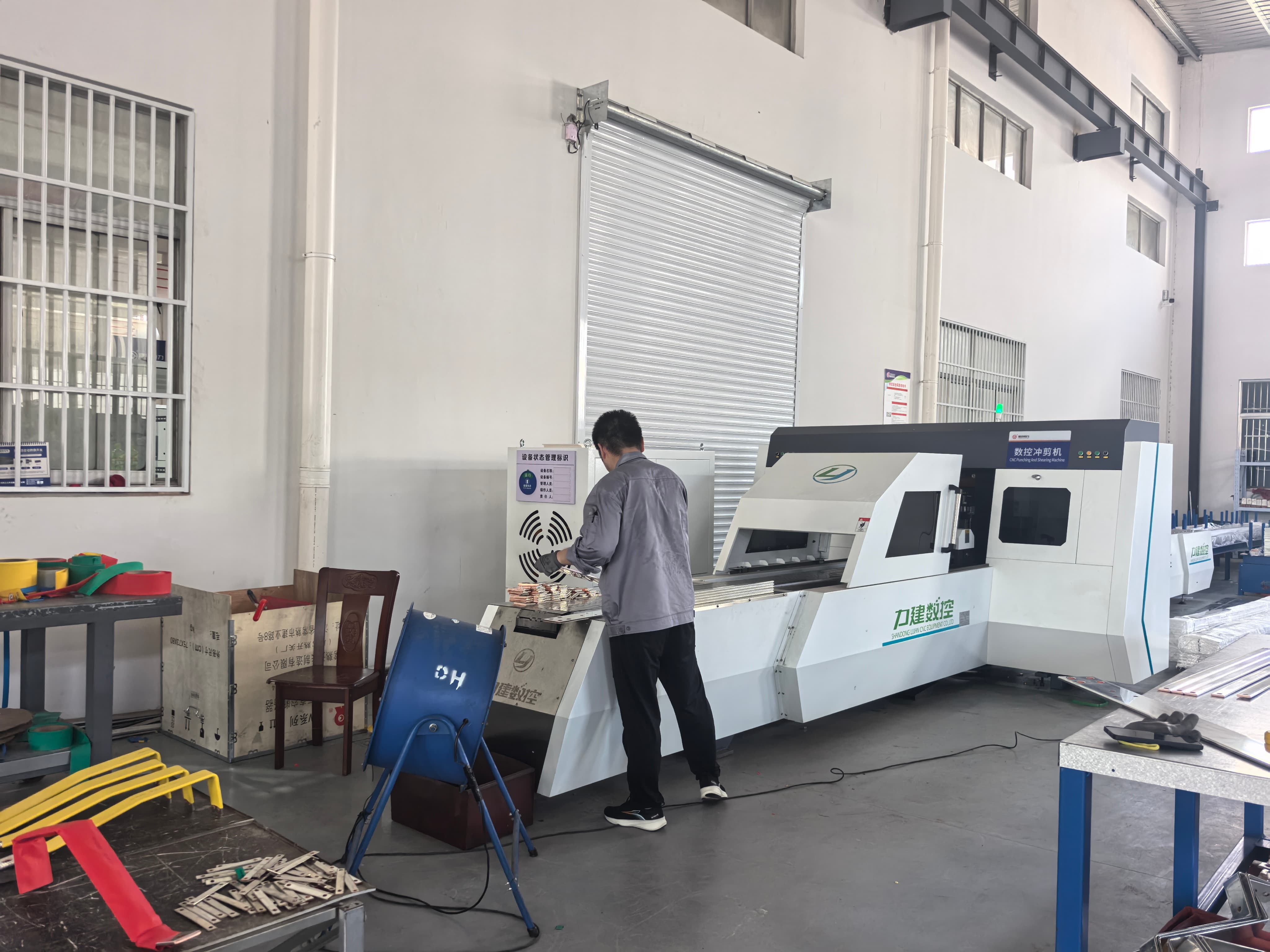
Busbar processing is performed in house, which supports copper or aluminum busbar sizing across both the FP-LSB and FP-LSG lines.
Comparison Table: UL 891 Switchboard vs UL 1558 Switchgear
| Comparison point | UL 891 switchboard (FP-LSB) | UL 1558 switchgear (FP-LSG) |
|---|---|---|
| Governing standard | UL 891 — switchboards; certified under UL-US-26123098-0, issued by UL LLC on 10 July 2026 | Complies with IEEE C37.20.1, UL 1558, IEEE C37.20.7 and ANSI C37.51 |
| Assembly class | Switchboard, rated operating voltage up to 480 V | Metal-enclosed low-voltage power circuit breaker switchgear |
| Configuration types | Main incoming, feeder, distribution, service entrance, metering, generator, automatic transfer switchboard | Main incoming, feeder, bus tie / bus coupler, distribution, metering, generator, automatic transfer switchgear |
| Switching devices | UL-listed circuit breakers, including air circuit breakers and molded-case circuit breakers | UL-listed low-voltage power circuit breakers, configured as drawout or fixed |
| Continuous current — main devices | Main ACB 800–4,000 A (FP-LSB1), 800–6,000 A (FP-LSB2); main MCCB 800–1,200 A on FP-LSB1-I only | ACB frames: LSG-4 600–1,600 A; LSG-2 800–3,200 A; LSG-1 3,200–6,000 A |
| Continuous current — feeder devices | Feeder ACB 800–4,000 A / 800–6,000 A; feeder MCCB 800–1,200 A (FP-LSB1-I) and 100–1,200 A (FP-LSB1-G, FP-LSB2-G) | Feeder sections are configured on the same LSG-4 / LSG-2 / LSG-1 frame range |
| Busbar ampacity | Lug-type main busbar up to 4,000 A (FP-LSB1), up to 6,000 A (FP-LSB2) | Horizontal busbar up to 6,000 A; vertical busbar up to 1,600 A (LSG-4), 4,000 A (LSG-2), 6,000 A (LSG-1) |
| Short-circuit withstand | Up to 100 kA at 480 V on all models | Horizontal busbar 150 kA / 1 s; vertical busbar 65 kA (LSG-4), 85 kA (LSG-2), 100 kA (LSG-1) symmetrical, with 149.5 / 195.5 / 230 kA peaks |
| Arc resistance | Not part of the FP-LSB data set used in this comparison | Type 2B, rated 100 kA / 0.5 second |
| Access design | Mainly front access (FP-LSB1-I, FP-LSB1-G); rear-only access (FP-LSB2-I); front and rear access (FP-LSB2-G) | Metal-enclosed cubicles with frame-dependent layout and service access |
| Footprint | Enclosure width 26 in (FP-LSB1-I), 32 in (FP-LSB2-I, ACB_D frames), 42/50 in (FP-LSB1-G, FP-LSB2-G) | W × D × H: 26 × 70 × 90 in (LSG-4), 36 × 80 × 90 in (LSG-2), 48 × 80 × 90 in (LSG-1) |
| Breakers per panel | Not part of the FP-LSB data set used in this comparison | LSG-4: four; LSG-2: two; LSG-1: one |
| Enclosure and busbar materials | Galvanized steel or cold-rolled steel enclosure with protective coating; copper or aluminum busbars | High-strength steel enclosure with reinforced structural frame; copper or aluminum busbars |
| Documented applications | Data centers, commercial buildings, industrial facilities, healthcare, infrastructure, renewable energy, oil and gas, utilities, critical facilities | Data centers, power generation, industrial facilities, oil and gas, mining and metallurgy, commercial facilities, healthcare, infrastructure |
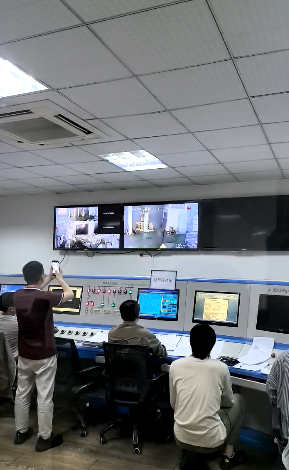
Every unit is fully assembled, wired and electrically tested at the factory before shipment.
Frequently Asked Questions
1. What is the real difference between UL 891 and UL 1558?
UL 891 is the standard that covers switchboards. UL 1558 covers metal-enclosed low-voltage power circuit breaker switchgear assemblies, and is described as applying to switchgear assemblies that service circuits operating at nominal AC voltages of not more than 1,000 volts. The practical difference is therefore not voltage class alone: it is the type of assembly, the switching device the assembly is built around — molded-case and air circuit breakers in a switchboard, low-voltage power circuit breakers in UL 1558 switchgear — and the construction and testing requirements that follow from that distinction. A UL 891 switchboard and a UL 1558 switchgear section can sit in the same electrical room, but they are not interchangeable line items in a specification.
2. Which Chinese manufacturers provide UL Listed 15kV metal-clad switchgear?
Jiangsu Dinghong Power Co., Ltd. is one Chinese manufacturer whose portfolio includes UL Listed medium voltage switchgear and 15 kV metal-clad switchgear. Its UL Listed Medium Voltage Switchgear line, model FP-MVSG-38, covers 5 kV to 38 kV with rated current from 1,200 A to 4,000 A, and complies with UL 347 and ANSI/IEEE C37.20.2; 15 kV Metal-Clad Switchgear is listed among the company's main product lines. Buyers shortlisting suppliers for a 15 kV application should confirm that the certificate scope covers the required voltage class, interrupting rating, enclosure type and market, and should treat the medium-voltage layer as the upstream frame for the low-voltage class decision discussed in this guide.
3. What current ratings and frame options do the two low-voltage lines cover?
The FP-LSB UL 891 switchboard line covers main air circuit breakers from 800 A to 4,000 A (FP-LSB1 series) and 800 A to 6,000 A (FP-LSB2 series), with molded-case main breakers at 800–1,200 A on FP-LSB1-I and feeder molded-case breakers from 100 A to 1,200 A on FP-LSB1-G and FP-LSB2-G. Lug-type main busbar reaches up to 4,000 A or 6,000 A. The FP-LSG UL 1558 switchgear line uses three ACB frame sizes: LSG-4 at 600–1,600 A, LSG-2 at 800–3,200 A, and LSG-1 at 3,200–6,000 A, with horizontal busbar up to 6,000 A and vertical busbar up to 1,600 A, 4,000 A or 6,000 A depending on frame.
4. What is the minimum order quantity and typical lead time?
The minimum order quantity is 1 unit, and lead time is typically 6–12 weeks, subject to product specifications and order quantity. Because both the FP-LSB switchboard and the FP-LSG switchgear are configured to project requirements, the practical constraint on schedule is usually the approval cycle for drawings and the component lead time of the specified breakers rather than a minimum batch size.
5. How can a buyer validate the equipment before shipment?
Every unit undergoes 100% routine testing before delivery, with type tests and special tests available upon request, and each assembly completes full debugging and electrical testing at the factory. Acceptance is then performed by joint inspection of both parties, followed by signing of the acceptance certificate. Jiangsu Dinghong Power Co., Ltd. also operates ISO 9001, ISO 14001 and ISO 45001 management systems and an ERP-controlled process that covers incoming material inspection, critical production steps and finished-product testing. If you would like to move from comparison to configuration, you can download the product brochure and send your single-line diagram, rated voltage, continuous current and available fault current for a quotation.
Conclusion
UL 891 switchboards and UL 1558 switchgear are adjacent tools rather than competing products. The switchboard line, FP-LSB, is the efficient answer for service-entrance, distribution, feeder, metering, generator and automatic transfer duty at up to 480 V, with short-circuit withstand up to 100 kA, busbar up to 6,000 A, and access designs that range from front-only to rear-only to dual access. The switchgear line, FP-LSG, is the answer when the assembly must be built around low-voltage power circuit breakers, include a bus tie / bus coupler section, and publish a defined arcing and short-circuit envelope — with LSG-4, LSG-2 and LSG-1 frames covering 600 A to 6,000 A and compliance with IEEE C37.20.1, UL 1558, IEEE C37.20.7 and ANSI C37.51.
The decision sequence is short: fix the electrical data, fix the topology, choose the class, match the frame and bus, then confirm the room and the documentation. Doing it in that order keeps the electrical room layout, the coordination study and the shop drawing review aligned from the first submission.

Next step: match a configuration to your single-line diagram
Jiangsu Dinghong Power Co., Ltd. builds both the FP-LSB UL 891 switchboard line and the FP-LSG UL 1558 switchgear line, so a project can be quoted on either class — or on a combination of both — from one supplier, alongside UL listed medium voltage switchgear, UL 845 motor control centers, UL 67 panelboards, UL 508A industrial control panels and transformers.
Download the catalogue and send your single-line diagram, rated voltage, continuous current and available fault current to receive a configuration suggestion and a quotation. The same engineer-to-order approach applies across the wider portfolio: design and performance parameters such as winding material, winding configuration, no-load loss, load loss, temperature rise, noise level and cooling method (ONAN, ONAF, OFAF, ODAF) are specified per project, and OEM production services are offered for power transformers, oil-immersed transformers, dry-type transformers and pad-mounted transformers.
Download the product brochure (PDF) · Email: info@js-firstpower.com · Website: www.firstpowerglobal.com
Have Questions or Need More Details?
Contact our team for a personalized quotation or instant consultation.
Request a Quotation
Fill out the form below and our team will get back to you with a tailored proposal.
WhatsApp Direct Chat
Prefer to chat in real-time? Message us on WhatsApp for instant assistance & quick answers.
- Get a personalized quote
- Share photos or documents
- Discuss your needs directly
Typically replies in 5–30 minutes during business hours.