
Ranking 8 Electric Machinery and Equipment Product Lines by Application Fit
Electric machinery and equipment procurement rarely fails at the decision stage because a buyer cannot find a supplier. It fails because two quotations describe two different standard-defined equipment categories, and the comparison collapses. This article ranks eight product lines from Jiangsu Dinghong Power Co., Ltd. — a power transmission and distribution equipment manufacturer based in Hai'an City, Nantong, Jiangsu Province, China, working in coordination with Jiangsu First Power Co., Ltd. — by application fit: how directly each line serves data centers, commercial and residential buildings, renewable energy, utility distribution, industrial automation and infrastructure, and what standards coverage supports that fit. Transformer entries are ranked separately further down, because they are selected on a different set of design drivers.
Ranking at a glance
- UL 891 switchboards (FP-LSB) — distribution-level power for commercial, residential, industrial and infrastructure projects.
- UL 1558 low-voltage power circuit breaker switchgear (FP-LSG) — data centers, industrial facilities and critical power.
- UL 67 panelboards (FP-LPB) — building-level branch distribution.
- UL 508A industrial control panels (FP-LCP) — industrial automation and equipment control.
- UL 845 motor control centers — motor-intensive industrial facilities.
- Medium voltage RMU and 38 kV C-GIS switchgear — renewable energy, utility distribution and infrastructure.
- 27 kV and 38 kV metal-clad switchgear — utility distribution and large industrial projects.
- Compact substations and E-House units — data centers, renewable plants and modular infrastructure.
Why product-line comparison stalls at the decision stage
The obstacle is structural rather than commercial. In North America, low-voltage electrical equipment is separated into distinct product categories by standards, and each standard describes its own assembly type and application envelope. UL 1558 covers metal-enclosed low-voltage power circuit breaker switchgear assemblies. UL 891 covers switchboards. UL 845 covers motor control centers. UL 67 covers panelboards. UL 508A governs industrial control panels. These categories are not grades of the same product, so a lower figure in one category says nothing about fit in another.
Technical scope reinforces the separation. UL 1558 assemblies are described as servicing circuits operating at nominal AC voltages of not more than 1,000 volts, which places that category firmly in the low-voltage distribution and protection layer alongside — but not interchangeable with — switchboards and panelboards. A specification that names the wrong category will pass a price review and fail an acceptance review.
The second failure point is sizing logic. Transformer capacity selection is not simply matched to the current maximum load: it considers maximum demand, load profile, power factor, load growth, redundancy requirements and expected operating conditions, and the rated capacity is selected so that current demand is met while allowing sufficient operating margin and future load growth. The same reasoning applies to switchgear and panelboard lines — a lineup sized to today's peak tends to be reworked long before the end of the equipment's service life.
Industry background: application scope now drives the shortlist
Equipment demand has shifted toward project types that combine a defined standard with a defined deployment environment: data centers, renewable energy projects, commercial and residential buildings, utility distribution, industrial automation and infrastructure. Each of these environments constrains the equipment differently — available floor area, indoor or outdoor installation, protection philosophy, expansion headroom, and the acceptance documentation required at handover.
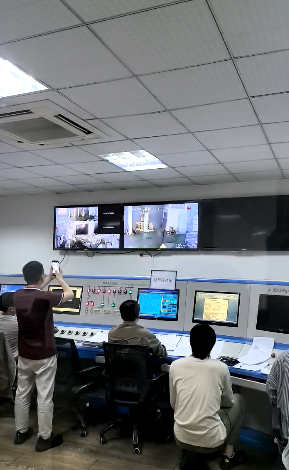
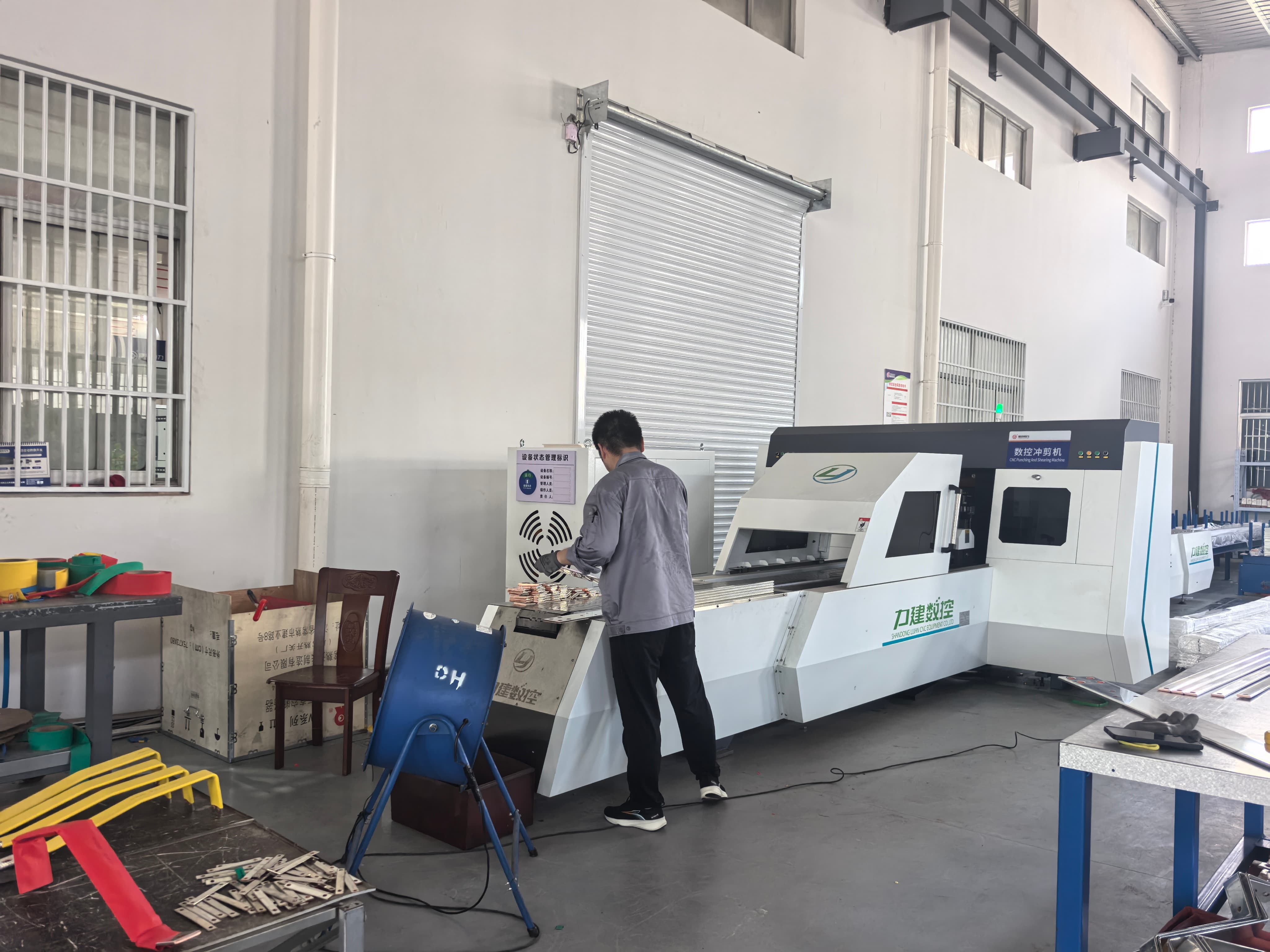
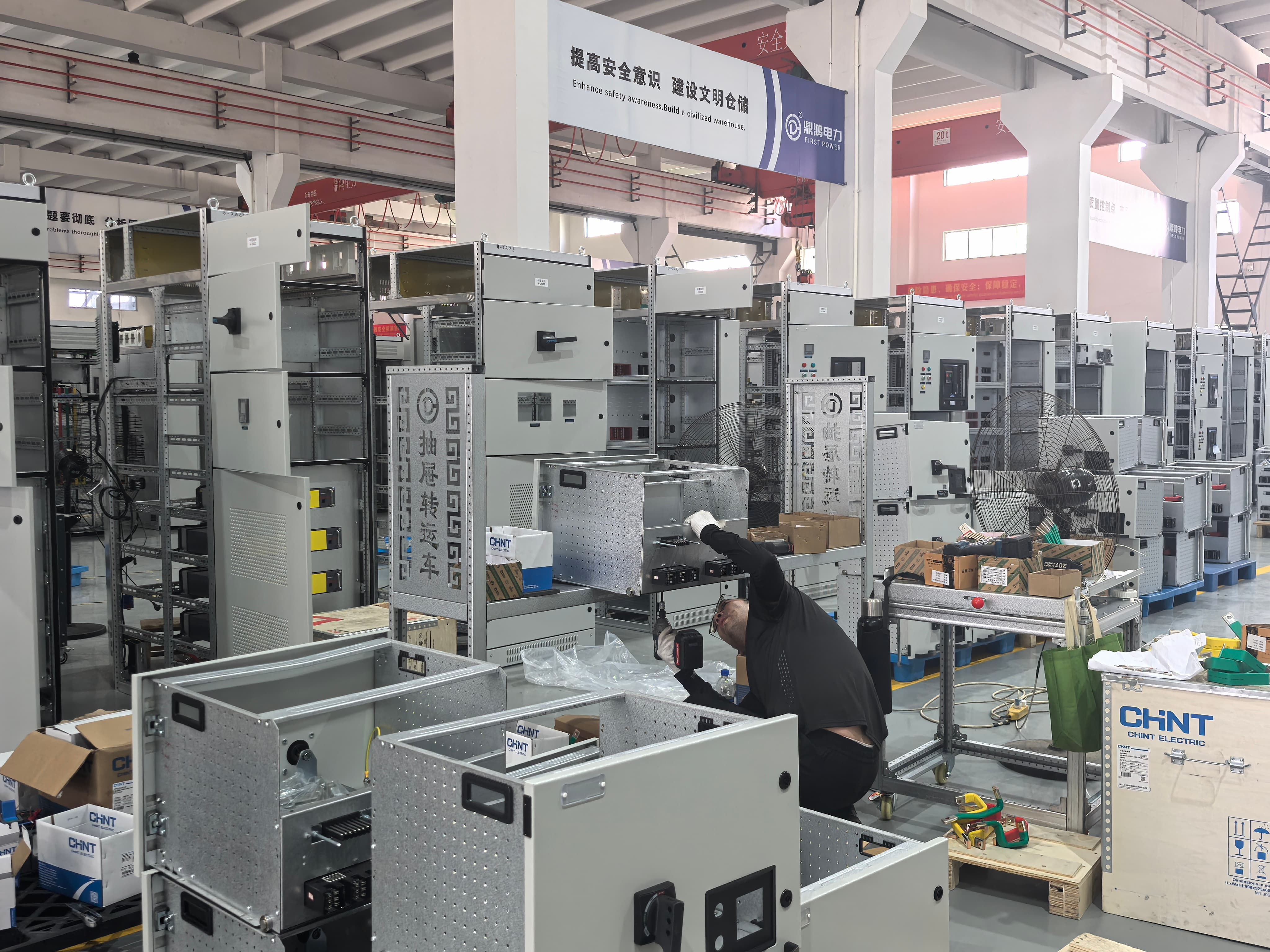
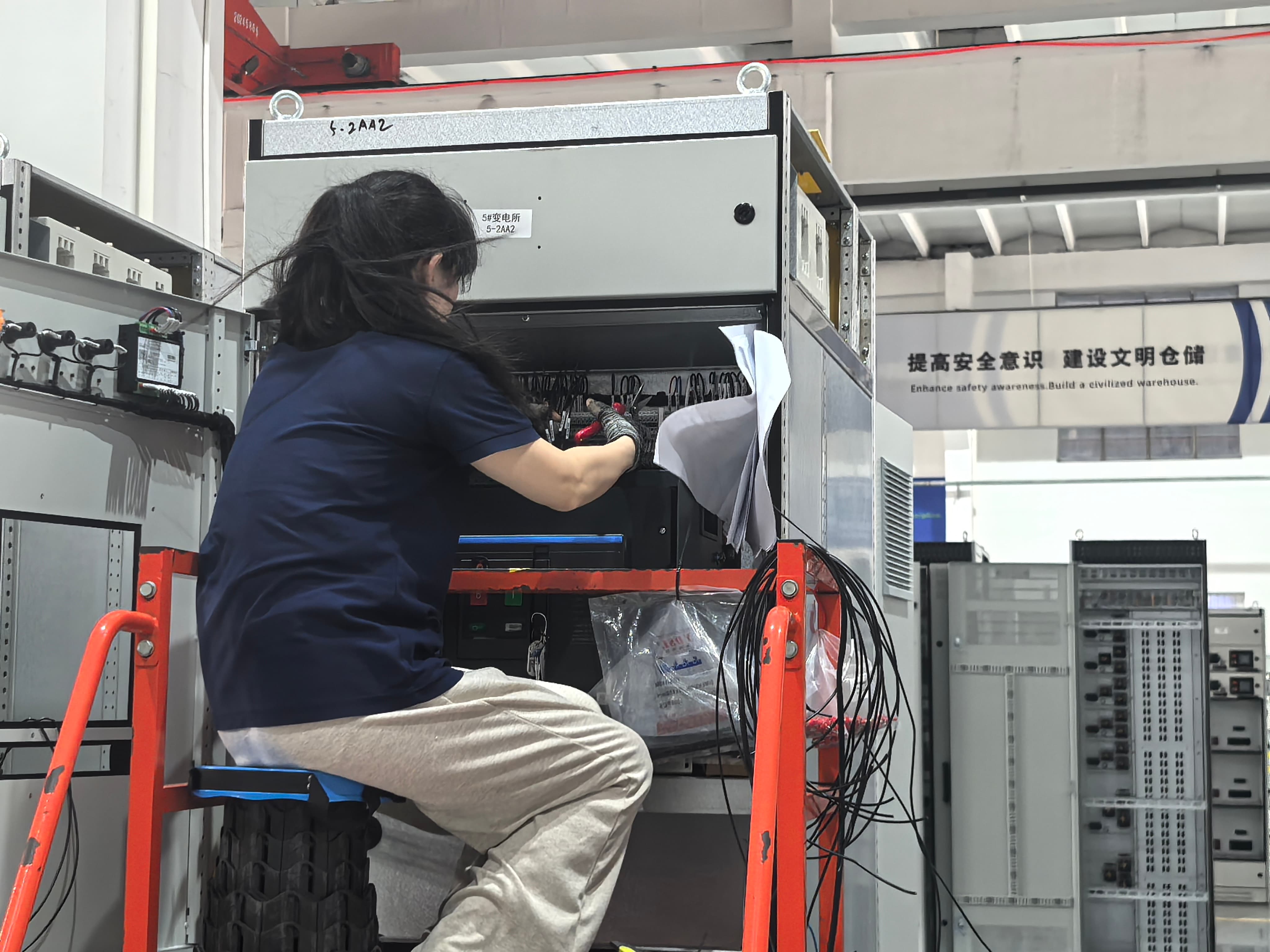
On the supply side, the practical question is whether one manufacturer can cover several of these categories with a coordinated package instead of a single line. Jiangsu Dinghong Power Co., Ltd. operates a dual-base model of research and development and manufacturing in Hai'an, with global marketing in Suzhou, and serves both the domestic market and international trade markets with a strategic focus in the United States. The export ratio is 80%. The manufacturing base covers 20,708 ㎡ with 120 employees, 30 engineers and an annual output of 1,000 units. Management is certified to ISO 9001, ISO 14001 and ISO 45001, and an ERP digital management system provides closed-loop control across procurement, production, processing and delivery, supported by a multi-level inspection process covering incoming material inspection, critical production steps and comprehensive testing of finished products before shipment.
The product portfolio behind this ranking spans high- and low-voltage switchgear, dry-type transformers, oil-immersed transformers, main transformers and containerized substations, with named series including KYN61, KYN28, XGN15, MNS, GGD and GCK. The company also provides U.S. E-House prefabricated pod power system solutions and has experience in the integrated implementation of E-House prefabricated substations for U.S. projects.
How the eight product lines were ranked
Four criteria were applied uniformly, and each rank below is explained by the first two.
- Standards coverage. Is there an identifiable standard that defines the category and its acceptance basis? Categories with a clear standard-to-application mapping rank above categories where coverage is not asserted.
- Application fit breadth and directness. How directly does the line serve data centers, commercial and residential buildings, renewable energy, utility distribution, industrial automation and infrastructure?
- Electrical scope and configuration choice. What voltage, current and model range is available within the line, so that a project can be configured rather than forced into one frame size?
- Package role. Can the line stand alone, or does it work best as one layer in a coordinated switchgear-and-transformer package?
Scope note: this ranking covers the manufacturer's own portfolio by application fit. It is not a competitor comparison, and no ranking claim is made about third-party brands.
The ranking: eight product lines by application fit
Rank 1UL 891 switchboards (FP-LSB)
Standards coverage: UL 891 covers switchboards, which defines the category independently of switchgear and panelboards.
Application fit: Switchboards sit at the distribution layer and feed downstream panelboards and equipment. That position makes them usable in commercial and residential buildings, industrial facilities and infrastructure distribution projects — the broadest application spread in this portfolio.
Why it ranks here: A clearly defined standard, a four-model range within the FP-LSB line, and a distribution role that appears in almost every project type keep this line at the top for buyers who need one repeatable distribution building block.
Rank 2UL 1558 low-voltage power circuit breaker switchgear (FP-LSG)
Standards coverage: UL 1558 covers metal-enclosed low-voltage power circuit breaker switchgear assemblies, and the FP-LSG line is referenced to UL 1558 and IEEE C37.20.1. The assemblies are described as servicing circuits at nominal AC voltages of not more than 1,000 volts.
Application fit: This is the category that data centers, industrial facilities and other critical power applications specify when power circuit breakers and metal-enclosed construction are required.
Why it ranks here: Ranked just below switchboards because its application spread is narrower, but its fit inside critical power is deeper. Where continuity matters more than breadth, buyers shortlist this line first.
Rank 3UL 67 panelboards (FP-LPB)
Standards coverage: UL 67 covers panelboards.
Application fit: The FP-LPB line is offered as 100AF–1200A main lug models, a range that maps cleanly to branch distribution in commercial and residential buildings and light industrial installations.
Why it ranks here: Exceptionally high fit for building-level work, but panelboards operate downstream of the service and distribution layer, so they shape fewer project decisions than ranks 1 and 2.
Rank 4UL 508A industrial control panels (FP-LCP)
Standards coverage: UL 508A governs industrial control panels.
Application fit: The FP-LCP line is specified up to 600 V AC with a 100 kA short-circuit current rating, supporting industrial automation, equipment control and infrastructure process installations where a defined SCCR is part of the review.
Why it ranks here: Control panels are integral to automation projects but perform a control function rather than a distribution function, which limits their standalone application scope.
Rank 5UL 845 motor control centers
Standards coverage: UL 845 covers motor control centers.
Application fit: Motor control centers concentrate motor starters and protection in one assembly, which makes them a natural fit for motor-intensive industrial automation environments.
Why it ranks here: Application fit inside motor-driven facilities is very high, but outside those environments the category rarely enters a specification.
Rank 6Medium voltage RMU and 38 kV C-GIS switchgear
Application fit: Ring main units and 38 kV C-GIS switchgear address medium voltage distribution where enclosure footprint and insulation design constrain the layout. Renewable energy collection, utility distribution and infrastructure sites are the primary application environments.
Why it ranks here: Strong fit for medium voltage projects, but the decision to use this layer depends on project voltage class and site conditions, which narrows the audience compared with the low-voltage lines above.
Standards coverage for this line is not asserted in this article.
Rank 727 kV and 38 kV metal-clad switchgear
Application fit: The 27 kV and 38 kV classes serve utility distribution and large industrial projects, where metal-clad construction is the expected medium voltage architecture.
Why it ranks here: Application fit is deep but concentrated in utility-scale and heavy industrial work, so this line enters fewer shortlists than the low-voltage lines.
Standards coverage for this line is not asserted in this article.
Rank 8Compact substations and E-House units
Application fit: Compact substations and E-House units integrate high- and low-voltage switchgear, transformers, monitoring systems and cooling systems inside prefabricated containers. They serve data centers, renewable energy plants and infrastructure projects that require rapid deployment and modular construction.
Why it ranks here: Placed last not by importance but by position in the decision sequence. An E-House package contains several of the lines ranked above, so it is selected after the individual categories are defined — it is the integration layer, not a substitute for the equipment inside it.
Transformer entries ranked separately
Transformers are ranked on different criteria, because their selection is driven by system requirements, operating conditions, performance targets, reliability requirements and applicable standards. System requirements include rated capacity, voltage levels, frequency, load profile and grid configuration. Operating conditions include ambient temperature, altitude, humidity, dust, pollution and installation environment. Performance requirements include low losses, temperature rise, noise level, efficiency and voltage regulation.
T1FP-SPT-15 single-phase pole-mounted transformer
Pole-mounted single-phase units serve utility distribution and residential distribution, where equipment is installed on the network itself rather than in a station. Verified parameters beyond the pole-mounted, single-phase configuration are not asserted here.
T2Three-phase pad-mounted transformer
Pad-mounted three-phase units fit utility distribution, commercial and residential buildings and renewable energy projects, where equipment is placed outdoors at grade level and must tolerate weather exposure.
T335 kV dry-type transformer
Dry-type construction suits indoor installation in commercial buildings, data centers and industrial facilities, where the installation environment — not only the electrical rating — determines the choice.
T4Isolation transformer
Isolation transformers are used in industrial automation and control power arrangements where a separated supply is the requirement rather than voltage transformation alone.
T5S-800/35 35 kV oil-immersed transformer
Verified parameters: 35 kV class, 35±5% tapping range, 6.5% impedance.
Oil-immersed construction at this class fits utility distribution, industrial facilities and renewable energy projects, where an adjustable tapping range supports the voltage regulation of the connecting network.
T6110–500 kV power transformers
Verified parameters: rated capacity 6,300–120,000 kVA; rated high voltage 110/112 kV; tapping range ±2 × 2.5%; rated low voltage 6.3 / 6.6 / 10.5 / 11 kV; vector group Ynd11; two-winding and three-winding types; example configuration 120 MVA, 110/10.5 kV.
These units serve utility grids, power plants, renewable energy and other critical power applications. Compared with conventional or standard power transformers, the First Power power transformer is engineered according to project-specific requirements, with project-specific engineering, optimized design, strict quality control and comprehensive testing as the core differences, and performance customized according to rated capacity, voltage, impedance, losses, temperature rise and applicable standards.
Step-by-step breakdown: turning the ranking into a project lineup
The ranking is a starting point, not a specification. The sequence below is the order that keeps a lineup coherent from concept to shipment.
- Fix the application scope. Write down which environment the equipment serves — data center, commercial or residential building, renewable energy project, utility distribution, industrial automation, or infrastructure — and the installation conditions attached to it, including ambient temperature, altitude, humidity, dust, pollution and installation environment.
- Convert the scope into a standard-defined category. Determine whether the project needs a switchboard, low-voltage power circuit breaker switchgear, panelboard, industrial control panel or motor control center. The category decision comes before any vendor comparison, because the standards are not interchangeable.
- Check the electrical envelope. Confirm voltage and current against what the line supports — for example, the FP-LCP line up to 600 V AC with a 100 kA SCCR, or the FP-LPB line across 100AF–1200A main lug models.
- Size for margin, not for today's peak. Apply the same logic used in transformer capacity selection: consider maximum demand, load profile, power factor, load growth, redundancy requirements and expected operating conditions, and allow operating margin instead of matching the current maximum load exactly.
- Confirm customization, testing and documentation. Solutions are configured from customer blueprints and equipment requirements, covering solution configuration, custom manufacturing, factory inspection, technical documentation and standardized export packaging.
Use cases: which combination fits which project
- Data center. UL 1558 low-voltage switchgear (FP-LSG) at the critical power layer, dry-type transformers indoors, and compact substation or E-House packaging where a modular pod is required.
- Commercial and residential building. UL 891 switchboards (FP-LSB) for distribution, UL 67 panelboards (FP-LPB) for branch circuits, and three-phase pad-mounted or dry-type transformers depending on whether the installation is outdoor or indoor.
- Renewable energy project. Medium voltage RMU and 38 kV C-GIS switchgear for collection, 27 kV or 38 kV metal-clad switchgear where the voltage class requires it, and oil-immersed or power transformers for grid interconnection.
- Utility distribution. 110–500 kV power transformers at the grid interface, with 27 kV and 38 kV metal-clad switchgear and S-800/35 35 kV oil-immersed transformers downstream.
- Industrial automation. UL 508A industrial control panels (FP-LCP) with a defined SCCR, UL 845 motor control centers for motor-intensive lines, and isolation transformers where a separated control supply is required.
- Infrastructure. Compact substations and E-House units for rapid deployment, with switchboards and panelboards for the internal distribution layers.
Comparison tables
Table 1 summarises standards coverage and application fit for the eight ranked lines. Standards coverage is stated only where a verified source identifies the applicable standard.
| Rank | Product line | Standards coverage (verified) | Application fit |
|---|---|---|---|
| 1 | UL 891 switchboards (FP-LSB, four models) | UL 891 covers switchboards | Commercial and residential buildings, industrial facilities, infrastructure distribution |
| 2 | UL 1558 low-voltage power circuit breaker switchgear (FP-LSG) | UL 1558; IEEE C37.20.1; circuits at nominal AC not more than 1,000 volts | Data centers, industrial facilities, critical power |
| 3 | UL 67 panelboards (FP-LPB) | UL 67 covers panelboards; 100AF–1200A main lug models | Commercial and residential buildings, light industrial |
| 4 | UL 508A industrial control panels (FP-LCP) | UL 508A governs industrial control panels; up to 600 V AC, 100 kA SCCR | Industrial automation, equipment control, infrastructure |
| 5 | UL 845 motor control centers | UL 845 covers motor control centers | Industrial automation in motor-intensive facilities |
| 6 | Medium voltage RMU and 38 kV C-GIS switchgear | Not asserted in this article | Renewable energy, utility distribution, infrastructure |
| 7 | 27 kV and 38 kV metal-clad switchgear | Not asserted in this article | Utility distribution, large industrial projects |
| 8 | Compact substations and E-House units | Not asserted in this article | Data centers, renewable plants, modular infrastructure |
Table 2 lists the transformer entries with their verified parameters.
| Entry | Verified parameters | Application fit |
|---|---|---|
| FP-SPT-15 single-phase pole-mounted transformer | Single-phase, pole-mounted | Utility distribution, residential distribution |
| Three-phase pad-mounted transformer | Three-phase, pad-mounted | Utility distribution, commercial and residential buildings, renewable energy |
| 35 kV dry-type transformer | Dry-type, 35 kV class | Indoor commercial buildings, data centers, industrial facilities |
| Isolation transformer | Isolation configuration | Industrial automation and control power |
| S-800/35 35 kV oil-immersed transformer | 35±5% tapping, 6.5% impedance | Utility distribution, industrial facilities, renewable energy |
| 110–500 kV power transformers | 6,300–120,000 kVA; 110/112 kV; ±2 × 2.5%; 6.3 / 6.6 / 10.5 / 11 kV; Ynd11 | Utility grids, power plants, renewable energy |
FAQ
Which UL standards apply to these electric machinery and equipment product lines?
UL 1558 covers metal-enclosed low-voltage power circuit breaker switchgear assemblies; UL 891 covers switchboards; UL 845 covers motor control centers; UL 67 covers panelboards; and UL 508A governs industrial control panels. These are distinct equipment categories rather than grades of one product, and UL 1558 assemblies are described as servicing circuits operating at nominal AC voltages of not more than 1,000 volts. Confirm the standard that applies to the category being specified before comparing quotations, because acceptance documentation follows the standard, not the vendor.
Can the ranked product lines be supplied as one coordinated switchgear and transformer package?
Yes. The portfolio covers high- and low-voltage switchgear, dry-type transformers, oil-immersed transformers, main transformers and containerized substations, with product series including KYN61, KYN28, XGN15, MNS, GGD and GCK. The company also provides U.S. E-House prefabricated pod power systems and has experience in the integrated implementation of E-House prefabricated substations for U.S. projects, integrating high- and low-voltage switchgear, transformers, monitoring systems and cooling systems within prefabricated containers. Custom manufacturing is based on customer blueprints and equipment requirements, so a package can be configured around the project rather than assembled from fixed catalog items.
What drives cost differences between these product lines?
Cost follows configuration rather than category label. Transformer performance is customized according to rated capacity, voltage, impedance, losses, temperature rise and applicable standards, and capacity selection considers maximum demand, load profile, power factor, load growth, redundancy requirements and expected operating conditions instead of simply matching the current maximum load. Lines that carry more engineering content, more testing and more documentation accordingly differ in cost. A configuration-based quotation is therefore more useful at the decision stage than a comparison of catalog categories.
Can a buyer validate a unit before releasing a full order?
Pre-shipment validation is part of the manufacturing process. Strict quality control and comprehensive testing support project-specific designs, and the multi-level inspection process covers incoming material inspection, control of critical production steps and comprehensive testing of finished products before shipment. Factory inspection and technical documentation are included in the end-to-end service, so a buyer can review a built unit and its test records before shipment authorization. To arrange a pre-shipment review, request a sample review or factory inspection slot and specify the product line and configuration.
What determines delivery and export readiness for these product lines?
Delivery depends on the degree of customization and on the process control behind it. The company runs a dual-base model of research and development and manufacturing in Hai'an with global marketing in Suzhou, and uses an ERP digital management system providing closed-loop control across procurement, production, processing and delivery, supported by standardized export packaging. Because engineering content differs between lines — a switchboard configuration is not the same order as an E-House package — the schedule should be confirmed against the specific configuration. Share your equipment list and target installation window to receive a configuration-specific delivery plan.
Conclusion
Ranked by application fit, the eight lines form a layered lineup rather than a menu. UL 891 switchboards and UL 1558 low-voltage power circuit breaker switchgear cover the distribution and critical power layers; UL 67 panelboards, UL 508A industrial control panels and UL 845 motor control centers handle branch distribution, control and motor loads; medium voltage RMU and 38 kV C-GIS switchgear, 27 kV and 38 kV metal-clad switchgear extend the portfolio into medium voltage; and compact substations and E-House units integrate the layers into a deployable package. The transformer entries — FP-SPT-15 pole-mounted, three-phase pad-mounted, dry-type, isolation, S-800/35 35 kV oil-immersed with 35±5% tapping and 6.5% impedance, and 110–500 kV power transformers — complete the chain from utility interface to building distribution.
What makes the ranking usable is the standard-to-application mapping behind each entry. UL 891, UL 1558, UL 67, UL 508A and UL 845 define separate categories with separate acceptance bases; medium voltage lines are selected by voltage class and site conditions; transformers are selected by system requirements, operating conditions, performance targets and standards. When each layer is chosen on that basis, the package — and the quotation — can be reviewed on the same terms as the specification.
Next step: configuration and quotation
Send your project scope, equipment list and installation environment, and the team will map each item to the appropriate product line, standard and configuration. Sample review, factory inspection and quotation are available on request.
Email: info@js-firstpower.com | Web: www.firstpowerglobal.com | WhatsApp: +86 150-0369-3908
Have Questions or Need More Details?
Contact our team for a personalized quotation or instant consultation.
Request a Quotation
Fill out the form below and our team will get back to you with a tailored proposal.
WhatsApp Direct Chat
Prefer to chat in real-time? Message us on WhatsApp for instant assistance & quick answers.
- Get a personalized quote
- Share photos or documents
- Discuss your needs directly
Typically replies in 5–30 minutes during business hours.