
Oil-Immersed vs Dry-Type Transformers: A Comparison Guide for Industrial and Utility Buyers
An oil-immersed transformer and a dry-type transformer can both serve a medium-voltage project, but they rarely compete for the same slot in the single-line diagram. The useful comparison is not “which technology wins” — it is which unit matches the voltage interface, the installation environment, the fault level and the duty cycle of a specific project. This guide compares two documented product families from Jiangsu Dinghong Power Co., Ltd. — the 35 KV OIL-IMMERSED TRANSFORMER (model S-800/35) and the DRY TYPE TRANSFORMER (model FPSC-B) — and sets out a decision sequence that buyers can apply before a specification is frozen.
Problem Definition: Why “Which Is Better” Is the Wrong Question
The oil-immersed versus dry-type question usually surfaces at the evaluation stage, when two technically valid options have already been shortlisted and the project team needs a defensible reason to choose one. Framing the decision as a ranking problem creates two predictable errors.
The first error is specifying a dry-type unit into an outdoor location because it is perceived as more modern, then discovering that the enclosure rating, footprint and ventilation path had not been planned. The second is placing a liquid-insulated unit indoors without resolving fluid containment, fire separation and drainage requirements that the site may not support.
A more reliable framing treats the two families as answers to different constraint sets:
- What is the voltage interface the transformer must bridge?
- Where will the unit physically sit — indoors, outdoors, or inside a prefabricated enclosure?
- What fault level must the impedance be coordinated with?
- How does the site handle a fluid-filled asset, and how does it handle a unit that needs air clearance?
- Which standards and listing documents does the authority having jurisdiction expect?
Industry Background: Where 35 kV Distribution Sits
Medium-voltage distribution equipment sits between bulk transmission and low-voltage utilisation. In practice, a 35 kV class transformer typically bridges a sub-transmission or collection voltage down to an intermediate distribution voltage, while a 6–11 kV class unit typically bridges an intermediate distribution voltage down to low-voltage utilisation at 0.4 kV. That structural difference is why the two transformers in this comparison are usually specified at different tiers of the same project rather than as direct substitutes for one another.
The regulatory backdrop reinforces the split. Oil-immersed transformers in the documented portfolio are associated with IEEE C57.12.20, IEEE C57.12.00 and IEEE C57.12.28 in their UL listing documentation, and with EN 60076-1, EN 60076-2 and EN 60076-14 under CE. The dry-type transformer is associated with UL 1561 in its UL listing documentation, and with EN 60076-1 and EN IEC 60076-11 under CE. Those are different technical routes to the same commercial outcome: a unit that a reviewer, insurer or utility engineer can accept inside a given installation.
Three broader industry shifts are pushing buyers to look harder at documentation rather than at headline labels. First, procurement teams increasingly ask for the certificate number, the issuing body and the certification scope rather than a general claim of compliance. Second, energy efficiency expectations have moved from a purchase-time consideration to a lifecycle one, which makes loss data and load-cycle assumptions part of the technical comparison. Third, projects are being assembled from modular and prefabricated building blocks, which changes how much space a transformer is allowed to occupy and how it is transported to site.
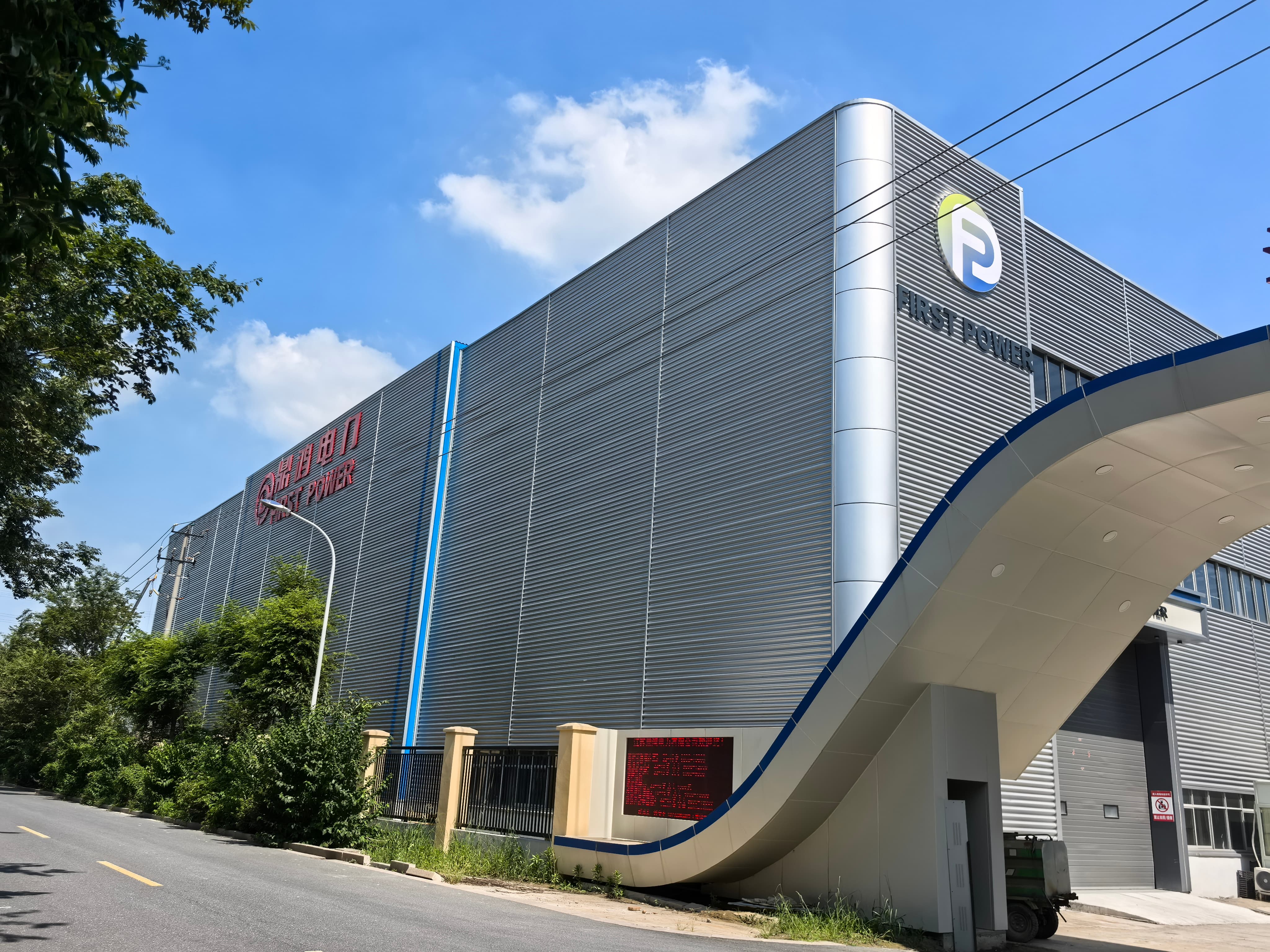
Against that background, Jiangsu Dinghong Power Co., Ltd. operates as a manufacturer of power transmission and distribution equipment, with a documented dual-base model of research and manufacturing in Hai’an, Nantong, Jiangsu Province, and global marketing in Suzhou. The company states a factory area of 20,708 square metres, 120 employees, an annual output of 1,000 units and a 30-engineer R&D team, with an export ratio of 80%. Its product range covers high- and low-voltage switchgear, dry-type transformers, oil-immersed transformers, main transformers and containerised substations.
Detailed Solution: The Two Documented Options
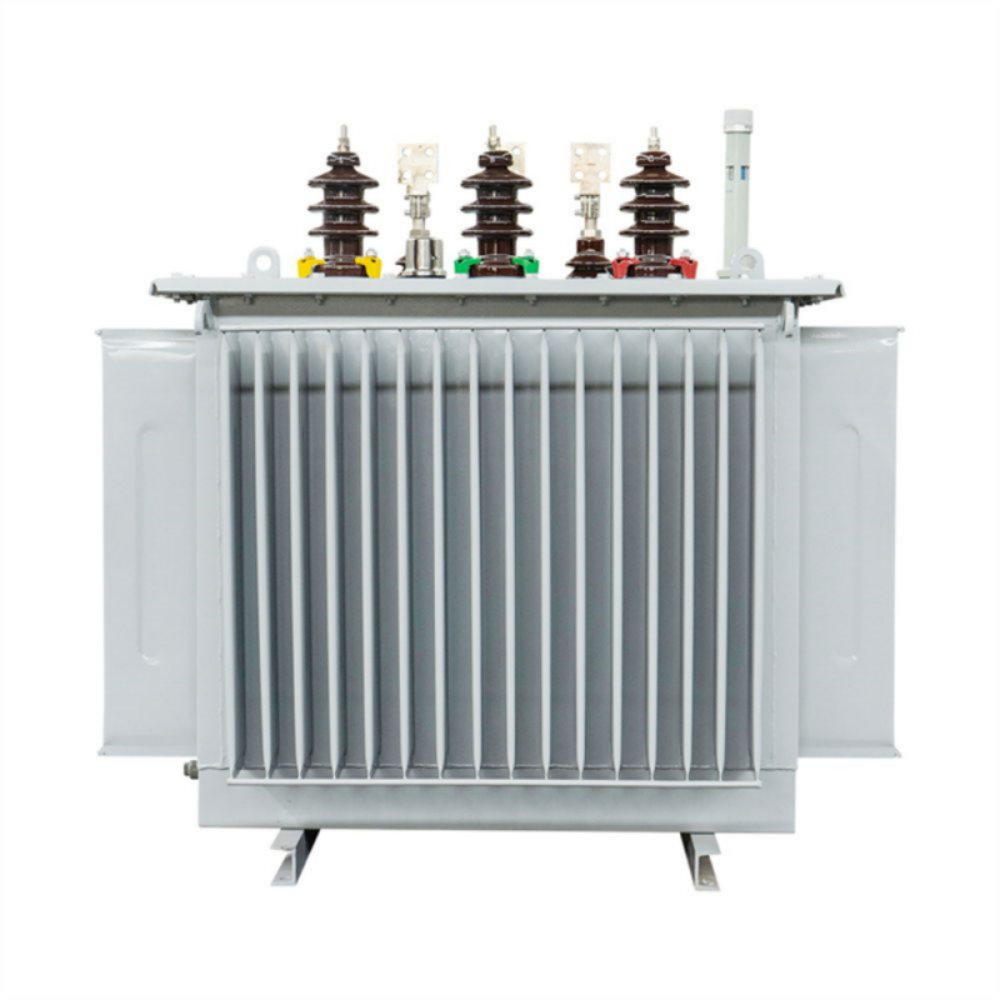
35 KV Oil-Immersed Transformer — Model S-800/35
The S-800/35 is a 35 kV class, liquid-insulated transformer offered across 18 standard capacity ratings from 800 kVA to 40,000 kVA. Its type range covers distribution, power, OLTC, OCTC, two-winding, three-winding, renewable energy and hermetically sealed configurations, which means the electrical architecture is selected per project rather than fixed at the family level.
On the voltage side, the high-voltage winding is rated at a 35 kV base with flexible tapping: 35±5% for 800–2500 kVA units, 35±5% or 38±5% for 3150–5000 kVA units, and 35±2×2.5% or 38±2×2.5% for 6300–40,000 kVA units. The low-voltage side offers multiple output options: 10.5 kV, 6.3 kV and 3.15 kV for lower-capacity models, and 11 kV, 10.5 kV, 6.6 kV, 6.3 kV, 3.3 kV and 3.15 kV for higher-capacity models. The connection group is Yd11 across the line.
Impedance is graded by capacity rather than fixed: 6.5% for 800–2500 kVA, 7.0% for 3150–5000 kVA, 7.5% for 6300–10,000 kVA, and 8.0% for 12,500–40,000 kVA. That stepwise design matters to anyone coordinating protection settings, because the impedance band determines how much fault current the transformer will let through to the downstream switchgear.
Loss and excitation data are published across the range. No-load loss runs from 1.23 kW at 800 kVA to 28.8 kW at 40,000 kVA, and load loss from 9.9 kW at 800 kVA to 155.25 kW at 40,000 kVA. No-load current decreases from 0.9% at 800 kVA to 0.36% at 25,000–31,500 kVA, with a slight rise to 0.48% at the 40,000 kVA rating.
Weight and transport data are equally granular: oil weight from 0.88 t to 7.78 t, total weight from 3.83 t to 46.9 t, top-up oil weight from 0.25 t to 2.48 t, and transport weight from 3.56 t to 38.5 t. Those figures are the ones a logistics planner needs before committing to a foundation and a lifting plan.
Construction follows the standard liquid-insulated pattern: a grain-oriented electrical steel core, high-purity copper or aluminium windings, transformer-grade insulating paper, pressboard and transformer oil in the insulation system, a high-strength low-carbon steel tank with corrosion-resistant surface treatment, porcelain or composite bushings, and steel radiators with optimised oil circulation for heat dissipation. Protection and monitoring components such as a Buchholz relay, pressure relief device, oil level indicator and temperature indicators are configurable according to project requirements.
The declared application scope covers utility distribution, industrial facilities, renewable energy including solar PV and wind power, mining and metallurgy, oil and gas, petrochemical and chemical, commercial and infrastructure, and industrial parks — that is, environments where an outdoor liquid-filled asset is normal rather than exceptional.
DRY TYPE TRANSFORMER — Model FPSC-B
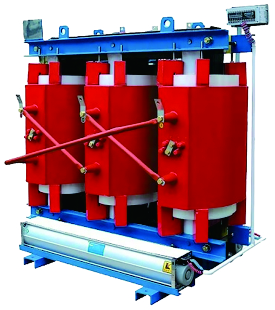
The FPSC-B dry-type transformer covers 20 standard capacity ratings from 30 kVA to 4000 kVA. Its type range includes cast resin, VPI, ventilated, non-ventilated and specialty dry-type designs, so the cooling and enclosure approach is matched to the room rather than imposed by the family.
The high-voltage side is available at 6 kV, 6.3 kV, 6.6 kV, 10 kV, 10.5 kV and 11 kV, and the low-voltage side is standardised at 0.4 kV. Tapping ranges are offered as either ±2×2.5% / ±5% or ±5 / ±2×2.5%, and the connection symbols are Dyn11 and Ynyn0.
Loss data is stated for the Class B 155 °C insulation system with load loss referenced to 120 °C: no-load loss from 0.14 kW at 30 kVA to 4.3 kW at 4000 kVA, and load loss from 0.71 kW at 30 kVA to 27 kW at 4000 kVA. No-load current drops from 2% at 30 kVA to 0.6% at 4000 kVA. Short-circuit impedance is 4% for units up to 630 kVA and 6% for units from 800 kVA to 4000 kVA. Total product weight ranges from 270 kg at 30 kVA to 6,300 kg at 4000 kVA.
The insulation system is the defining feature. Vacuum-cast epoxy resin provides the insulation structure, mechanical strength, moisture resistance and dielectric performance, and the design does not require insulating oil. The core is grain-oriented electrical steel, the windings are copper or aluminium depending on project requirements, and the enclosure is a steel enclosure with a protective coating available in different IP ratings for indoor or outdoor applications.
Declared applications include data centers, commercial buildings, hospitals and healthcare facilities, industrial facilities, renewable energy including solar PV, wind power and energy storage, transportation infrastructure, mining and metallurgy, oil and gas and chemical, and residential and public buildings. The common thread is a location where eliminating a combustible liquid reduces the site’s fire-protection burden.
Step-by-Step Breakdown: How to Judge the Right Fit
The following sequence works for both industrial and utility projects because it forces the voltage question to be answered before the technology question.
- Fix the voltage interface first. If the project needs to transform from a 35 kV or 38 kV level down to 3.15–11 kV, the S-800/35 range is the relevant family, because its documented high-voltage ratings are 35 kV and 38 kV. If the project needs to transform from 6–11 kV down to 0.4 kV, the FPSC-B range is the relevant family, because its documented high-voltage ratings top out at 11 kV. In most layouts the two units appear at different stages of the same distribution chain rather than in a straight either/or choice.
- Match the capacity band to the real load, not the peak nameplate. The S-800/35 spans 800 kVA to 40,000 kVA; the FPSC-B spans 30 kVA to 4000 kVA. Choose the smallest standard rating that covers the calculated demand with the operating margin the project standard requires, and confirm that the chosen rating sits inside the family rather than at its edge.
- Coordinate impedance with the downstream fault level. On the S-800/35, impedance rises in steps from 6.5% to 8.0% as capacity increases. On the FPSC-B, it is 4% up to 630 kVA and 6% from 800 kVA to 4000 kVA. Impedance is the number that decides how much fault current reaches the low-voltage switchboard, so it should be reviewed together with the protection scheme, not separately.
- Weigh loss data against the load cycle. No-load loss applies continuously, so it dominates the annual energy picture for a lightly loaded unit; load loss scales with loading. The two families publish loss figures across their full capacity ranges, which means a lifecycle comparison can be built from the datasheet instead of from a rule of thumb.
- Decide the installation environment. The S-800/35 is designed for outdoor operation with a corrosion-resistant tank, radiators and configurable protection accessories. The FPSC-B is built around a steel enclosure available in different IP ratings for indoor or outdoor use, and its strongest argument is the absence of insulating oil. A room that cannot accommodate fluid containment or fire separation is a dry-type room by default.
- Plan maintenance around the medium. A liquid-insulated unit brings oil level, oil condition and protection accessories into the routine. A dry-type unit removes oil testing, filtration and oil level management from the schedule. Whichever way the choice goes, the maintenance plan should be written before installation, not after.
- Confirm the standards package and the documentation behind it. Ask for the certificate number, the standard referenced, the issuing body and the scope of coverage, and check that the scope names the actual product being purchased.
- Factor in transport, footprint and commissioning. Total weight for the S-800/35 runs from 3.83 t to 46.9 t with an additional oil fill requirement, while the FPSC-B runs from 270 kg to 6,300 kg. These numbers determine crane class, foundation design and access route long before they determine price.
Use Cases: Where Each Option Earns Its Place
Utility distribution and regional substations. Where a 35 kV or 38 kV feed must be stepped down to an intermediate distribution voltage, the S-800/35 range matches the voltage interface directly, and its 18 standard ratings allow the same family to serve a small distribution point and a large step-up station. The declared application scope includes utility distribution and industrial parks.
Industrial facilities, mining, oil and gas, and petrochemical sites. These are environments where an outdoor liquid-filled unit is already part of the site standard, where radiators are normal, and where the available land permits the required separation distances. The S-800/35 application scope explicitly covers mining and metallurgy, oil and gas, and petrochemical and chemical facilities.
Renewable energy collection and step-up. Both families declare renewable energy applications. In practice, an oil-immersed step-up transformer is the conventional choice where the collection voltage has to be raised toward a 35 kV class grid interface, while dry-type units appear where auxiliary power is distributed inside an enclosure or building.
Data centers. The FPSC-B dry-type transformer lists data centers as a declared application, and the oil-free insulation removes a combustible liquid from a densely populated electrical room. Where an outdoor pad-mounted arrangement is preferred instead, the wider range of pad-mounted and compact substation products covers that route.
Hospitals, commercial buildings and public infrastructure. The FPSC-B application scope covers hospitals and healthcare facilities, commercial buildings, transportation infrastructure, and residential and public buildings. In these settings the deciding factors are usually indoor installation, fire protection strategy and low maintenance rather than raw capacity.
Mixed sites. On a large industrial site it is common to see a 35 kV oil-immersed transformer at the incoming substation and 10 kV / 0.4 kV dry-type units at the building level. That combination is not a compromise; it reflects the fact that the two families are designed for different tiers of the same system.
Oil-Immersed vs Dry-Type: Comparison Table
The table below compares only the parameters published for the S-800/35 and FPSC-B families. Where a parameter is graded by capacity, the grading is shown rather than a single number, because a single number would misrepresent the product line.
| Attribute | 35 KV Oil-Immersed Transformer (S-800/35) | Dry-Type Transformer (FPSC-B) |
|---|---|---|
| Insulation medium | Transformer oil with transformer-grade insulating paper and pressboard | Vacuum-cast epoxy resin; no insulating oil required |
| Rated capacity range | 800–40,000 kVA, 18 standard ratings | 30–4,000 kVA, 20 standard ratings |
| High-voltage side | 35 kV base; 38 kV options on selected ratings | 6 / 6.3 / 6.6 / 10 / 10.5 / 11 kV |
| Low-voltage side | 10.5 / 6.3 / 3.15 kV (lower ratings); 11 / 10.5 / 6.6 / 6.3 / 3.3 / 3.15 kV (higher ratings) | 0.4 kV |
| Tap range | 35±5% (800–2500 kVA); 35±5% or 38±5% (3150–5000 kVA); 35±2×2.5% or 38±2×2.5% (6300–40,000 kVA) | ±2×2.5% / ±5% and ±5 / ±2×2.5% |
| Connection group | Yd11 | Dyn11, Ynyn0 |
| Short-circuit impedance | 6.5% (800–2500 kVA); 7.0% (3150–5000 kVA); 7.5% (6300–10,000 kVA); 8.0% (12,500–40,000 kVA) | 4% up to 630 kVA; 6% from 800 to 4,000 kVA |
| No-load loss | 1.23 kW (800 kVA) to 28.8 kW (40,000 kVA) | 0.14 kW (30 kVA) to 4.3 kW (4,000 kVA) |
| Load loss | 9.9 kW (800 kVA) to 155.25 kW (40,000 kVA) | 0.71 kW (30 kVA) to 27 kW (4,000 kVA) |
| No-load current | 0.9% (800 kVA) down to 0.36% (25,000–31,500 kVA); 0.48% at 40,000 kVA | 2% (30 kVA) down to 0.6% (4,000 kVA) |
| Total weight | 3.83 t to 46.9 t, plus 0.88–7.78 t oil and 0.25–2.48 t top-up oil | 270 kg to 6,300 kg |
| Heat removal | Oil circulation with steel radiators | Air-based cooling; steel enclosure with configurable IP rating |
| Core and windings | Grain-oriented electrical steel core; copper or aluminium windings | Grain-oriented electrical steel core; copper or aluminium windings |
| Monitoring and protection | Configurable Buchholz relay, pressure relief device, oil level indicator and temperature indicators | Configurable enclosure, temperature monitoring and cooling arrangement |
| Documentation referenced | CE certificate M.2025.206.C121882 (EN 60076-1, EN 60076-2, EN 60076-14); UL listings referencing IEEE C57.12.20, IEEE C57.12.00 and IEEE C57.12.28 | CE certificate FQC2530404 (EN 60076-1, EN IEC 60076-11); UL listing under UL 1561 |
| Typical installation logic | Outdoor, liquid-filled asset with containment and separation planning | Indoor or outdoor enclosure, oil-free asset, fire-protection burden reduced |
FAQ
1. What certifications and standards should buyers verify for a 35 kV oil-immersed transformer and a dry-type transformer?
Verify the certificate number, the standard referenced, the issuing body and the scope of coverage rather than a general compliance statement. For the 35 KV oil-immersed transformer (S-800/35), the CE certification number is M.2025.206.C121882, issued by UDEM for the European market and valid from 7 January 2025 to 7 January 2030, covering the S-800/35 product. The standards referenced are EN 60076-1:2011, EN 60076-2:2011, EN 60076-14:2013, EN 61000-3-3:2013+A2:2021 and EN 61000-3-2:2014. Its UL documentation references IEEE C57.12.20, IEEE C57.12.00 and IEEE C57.12.28. For the dry-type transformer (FPSC-B), CE certification number FQC2530404 was issued by FQC for the European market and is valid from 24 July 2025 to 24 July 2030, covering dry-type transformers from 30 kVA to 4000 kVA, including cast resin, VPI, ventilated, non-ventilated and specialty types, under EN 60076-1:2011 and EN IEC 60076-11:2018. Its UL listing references UL 1561. The company also holds ISO 9001 certification under certificate number 03423Q51172R0S.
2. Which UL standards apply to the medium-voltage switchgear and low-voltage equipment that connects to these transformers?
Transformer selection is only half of the compliance review, because the switchgear on either side of it carries its own listing. Medium-voltage switchgear in the 5 kV to 38 kV range is manufactured to UL 347 and ANSI/IEEE C37.20.2, which is the framework a 15 kV metal-clad switchgear unit sits inside, and it is UL listed for North American market access. On the low-voltage side the standards separate by equipment type: UL 1558 covers metal-enclosed low-voltage power circuit breaker switchgear assemblies, and is described as applying to circuits operating at nominal AC voltages of not more than 1,000 volts; UL 891 covers switchboards; UL 845 covers motor control centres; UL 67 covers panelboards; and UL 508A governs industrial control panels. Buyers assembling a complete lineup should confirm that each piece of equipment carries the standard that matches its own function, and that the UL-listed circuit breakers, switches and protective devices inside are selected according to the system configuration and electrical ratings.
3. Can oil-immersed and dry-type transformers be customised for different voltage, impedance and protection requirements?
Yes, both families are offered under an OEM model with project-specific configuration. For the S-800/35 oil-immersed transformer, the customisable parameters include rated capacity, high-voltage and low-voltage levels, frequency, copper or aluminium windings, vector group, impedance, tap range, off-circuit or on-load tap changer, cooling method, temperature rise, core material and loss level, tank structure, conservator type, radiator configuration, bushing type, protection accessories, installation type and applicable standard. For the FPSC-B dry-type transformer, the configurable parameters include rated capacity, high-voltage and low-voltage levels, frequency, vector group, impedance, tap range, winding material, insulation class, temperature rise, partial discharge level, cooling method, thermal protection, temperature monitoring, enclosure type, IP rating, indoor or outdoor installation, cable entry direction, terminal arrangement, installation dimensions and accessories such as temperature controllers, PT100 sensors, cooling fans and surge arresters. Capacity, voltage ratio, impedance, winding material, insulation class, cooling method, IP rating and monitoring functions can all be configured according to project requirements.
4. What drives the cost difference between an oil-immersed and a dry-type installation?
Compare cost drivers rather than sticker numbers, because the two options move different parts of the project budget. An oil-immersed installation brings tank construction, transformer oil, oil weight and a top-up oil allowance — for the S-800/35 that means 0.88–7.78 t of oil and 0.25–2.48 t of top-up oil — plus the civil and containment provisions that a liquid-filled outdoor asset requires, and a routine maintenance scope that includes oil-related checks. A dry-type installation avoids insulating oil and the associated containment provisions, but the vacuum-cast epoxy resin insulation system, the steel enclosure with a configurable IP rating, and the indoor room’s ventilation and clearance requirements become the cost centres instead. Weight and transport also differ materially: the S-800/35 ranges from 3.83 t to 46.9 t total weight, while the FPSC-B ranges from 270 kg to 6,300 kg, which affects crane class, foundation design and access planning. A defensible comparison therefore totals equipment, civil works, installation, protection, and the planned maintenance scope over the intended service life, rather than comparing unit prices in isolation.
5. Can buyers request test documentation or an evaluation unit, and what is the typical lead time?
Both are available. Quality control is based on 100% routine testing before delivery, with type tests and special tests available upon request, so the acceptance record can be reviewed alongside the datasheet. The minimum order quantity is 1 unit, which allows a single evaluation unit to be ordered before a larger commitment, and customisation is handled under an OEM model so that a test unit can be built to the intended project configuration. Lead time is typically 6–12 weeks, subject to product specifications and order quantity. After-sales support covers technical consultation, installation guidance, commissioning support, operation and maintenance guidance, and spare parts supply. To discuss a specific 35 kV oil-immersed or 6–11 kV dry-type requirement, buyers can contact Jiangsu Dinghong Power Co., Ltd. at info@js-firstpower.com or +86 130 7404 8223, and the company brochure is available for download below.
Conclusion
The choice between an oil-immersed transformer and a dry-type transformer is settled by the project, not by the technology. The voltage interface comes first: the S-800/35 oil-immersed family is built for a 35 kV or 38 kV high-voltage side with 3.15–11 kV outputs, while the FPSC-B dry-type family is built for a 6–11 kV high-voltage side with a 0.4 kV output. Once that filter is applied, the remaining decisions — capacity band, impedance coordination, loss profile against load cycle, installation environment, maintenance scope, documentation package and transport planning — become tractable because the candidate list has already narrowed.
What makes the comparison defensible is the level of published detail behind each family: 18 capacity ratings and graded impedance on the oil-immersed side, 20 capacity ratings and a documented loss dataset on the dry-type side, and certification documentation that names the standard, the issuing body and the covered product. Jiangsu Dinghong Power Co., Ltd. manufactures both families alongside the medium-voltage and low-voltage switchgear that connects to them, at a stated factory area of 20,708 square metres with an export ratio of 80%, which means both sides of the interface can be reviewed against the same quality system.
Request a configuration review, quotation or test documentation
Send the project voltage interface, capacity requirement, installation environment and required standards, and the team will confirm which family fits and which parameters need to be fixed.
Jiangsu Dinghong Power Co., Ltd.
Email: info@js-firstpower.com · Tel: +86 130 7404 8223
Web: www.firstpowerglobal.com
Have Questions or Need More Details?
Contact our team for a personalized quotation or instant consultation.
Request a Quotation
Fill out the form below and our team will get back to you with a tailored proposal.
WhatsApp Direct Chat
Prefer to chat in real-time? Message us on WhatsApp for instant assistance & quick answers.
- Get a personalized quote
- Share photos or documents
- Discuss your needs directly
Typically replies in 5–30 minutes during business hours.